

The accordion king of Ådalen
Erling Grönstedt
1923 – 2012
Erling Grönstedt was the younger of the two great accordionists from Lugnviksstrand. Less famous than his brother Karl, but every bit as skilled – and a composer whose melodies are still played all over Sweden.
- Swedish junior champion in 1938
- 18 years as an accordion teacher
- Composer of “Kaffetåren” and “Norrlandstakter”
Born in Lugnviksstrand
March 21, 1923, youngest of five siblings
Swedish junior champion
1938, aged 14
Composer
“Kaffetåren,” “Norrlandstakter” and 100+ melodies
Married 1964
To Birgit Margareta Bruno from Lien
Erling’s story
A life in five chapters
Childhood in Lugnviksstrand (1923–1934)
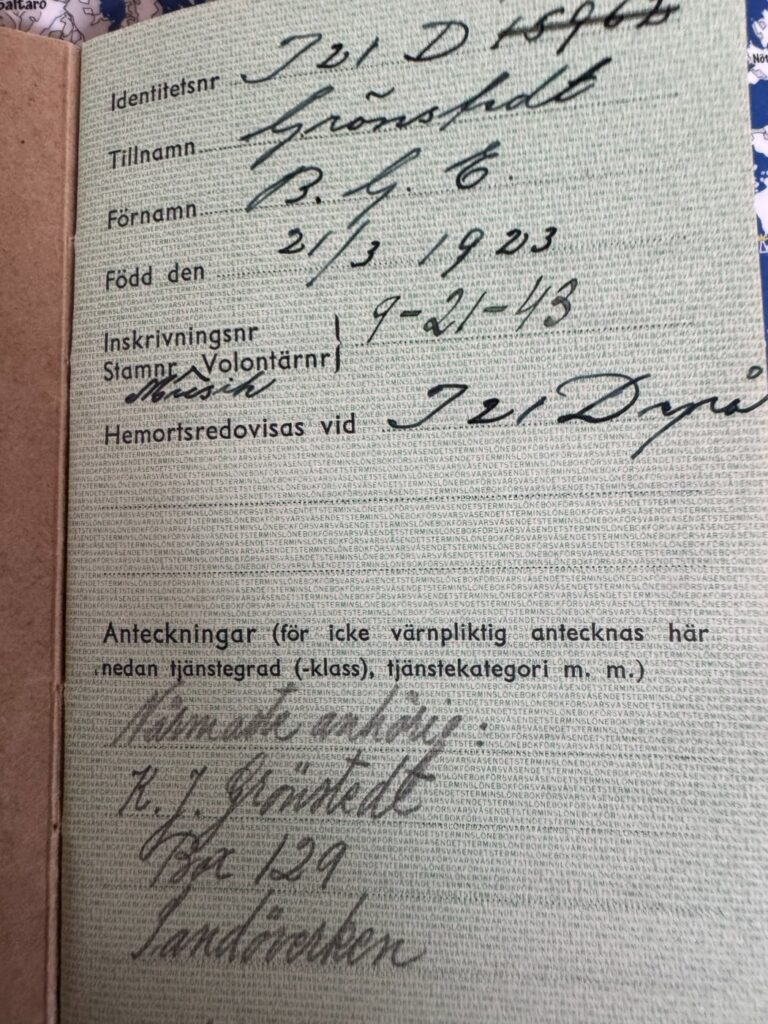
Bengt Gustaf Erling Grönstedt was born on March 21, 1923, in Lugnviksstrand in the parish of Bjärtrå, Ångermanland, the youngest of five siblings – Karl (1912), Ture (1913), Gösta (1916), Margot (1919–1949) and Erling.
The family was “accordion-crazy,” and along the Ångerman River there was music “everywhere, in every single cottage.” While his big brother Karl was already known as a competition accordionist, Erling grew into the music – at the age of eleven, in 1934, he made his debut as an accordion soloist.
Competition successes (1936–1939)
- 1936 (aged 12): third place in Sweden’s first junior accordion championship at the Auditorium in Stockholm on February 2 – “knee-high, neatly slicked-down hair with a side parting,” ahead of Lill-Acke Jakobsson and Lill-Arne Söderberg, among others
- 1937 (aged 13): competing in the Ådalen Championship at Skog on March 7 – as last year’s winner of class II, while big brother Karl played hors concours
- 1938 (aged 14): Swedish junior accordion champion at the Auditorium in Stockholm, February 5–6 – with the Excellent accordion bearing the name ERLING, now in the Accordion Archive in Kramfors
- 1939 (aged 15): third prize in the Nordic junior accordion championship at Cirkus in Stockholm, March 18–19, where the audience voted – 174 votes
Erling had inherited the family talent. His technical skill and musical feeling made him one of Sweden’s most promising young accordionists.
Radio debut (1938)
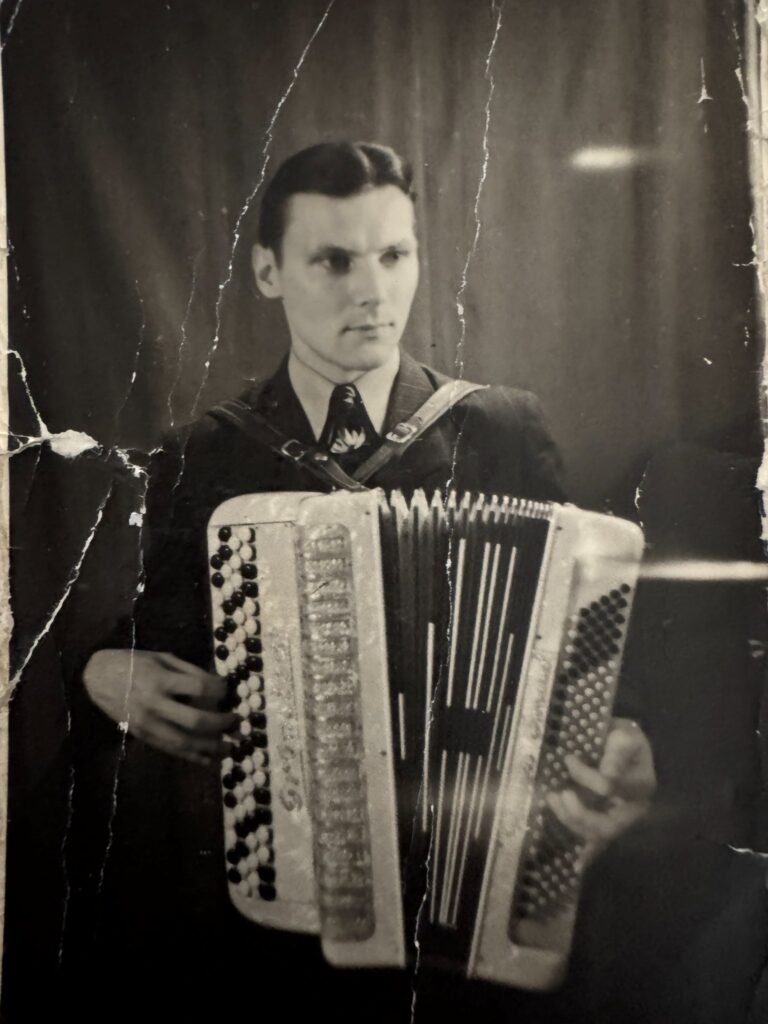
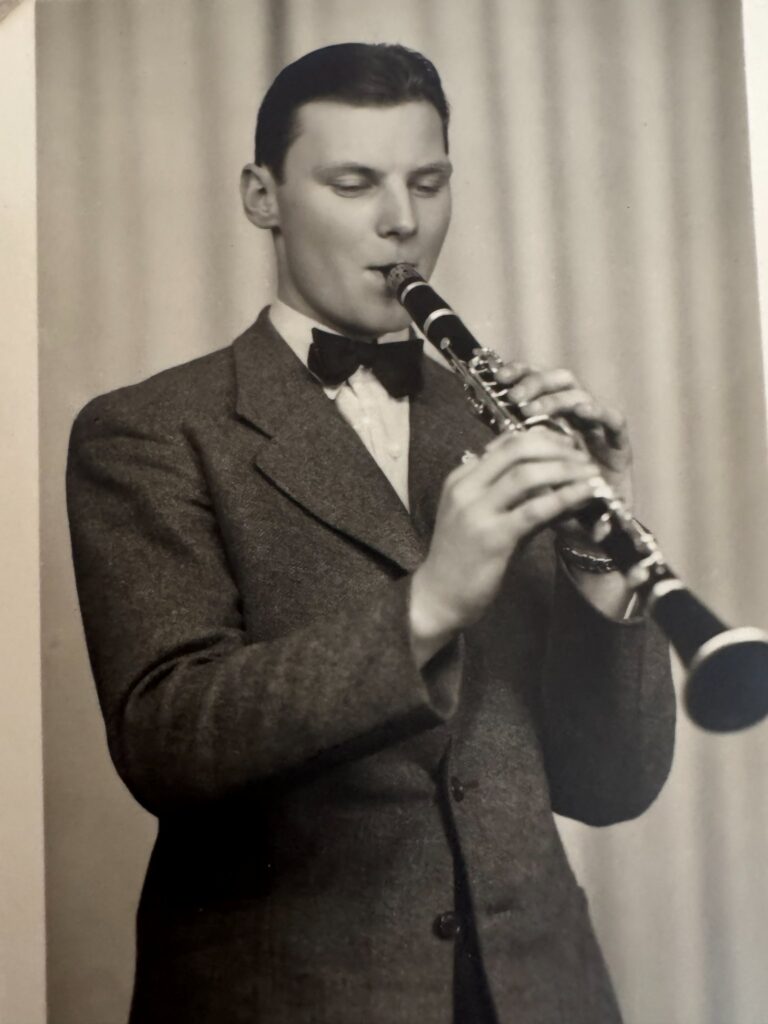
In 1938, at fifteen, Erling made his radio debut – in a live broadcast from Sundsvall. “I was nervous, of course,” he recalled much later. At the same time he played drums in big brother Kalle’s band, together with his brothers Ture and Gösta, at dance venues such as Furuparken in Ullånger and Geresta in Nordingrå. The following spring, in 1939, he set out on his first tour with the Femlingarna – see the photos from his album.

A very young Erling Grönstedt.
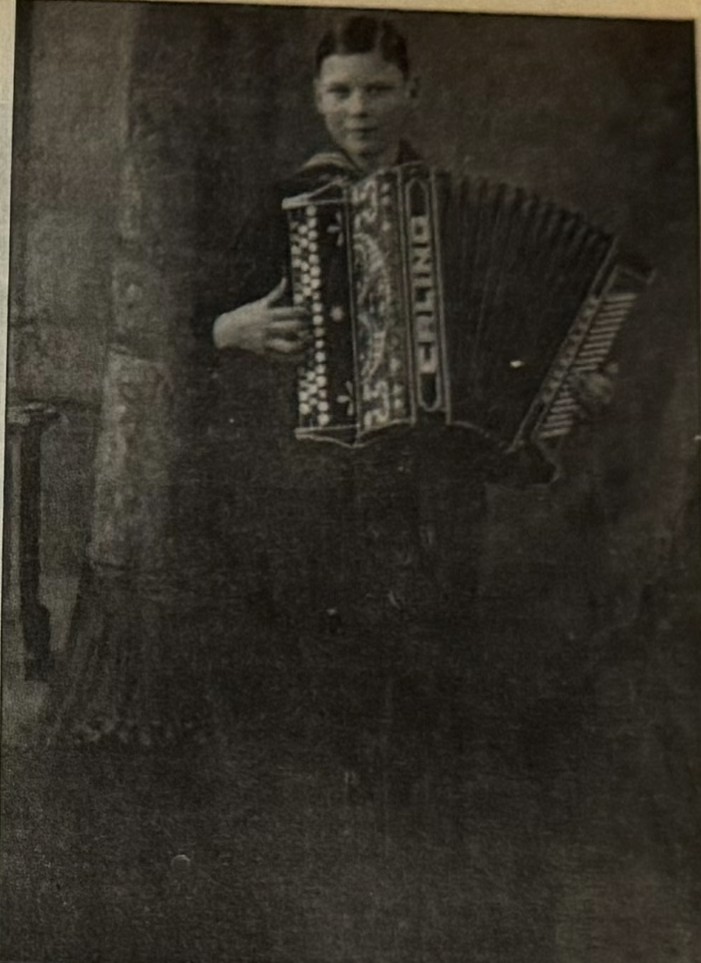
Erling at 12 in a sailor collar, photographed at Grundel’s photo studio in Klockestrand. The accordion reads ERLING – it is the Excellent instrument he won the junior championship with, now in the Accordion Archive in Kramfors.
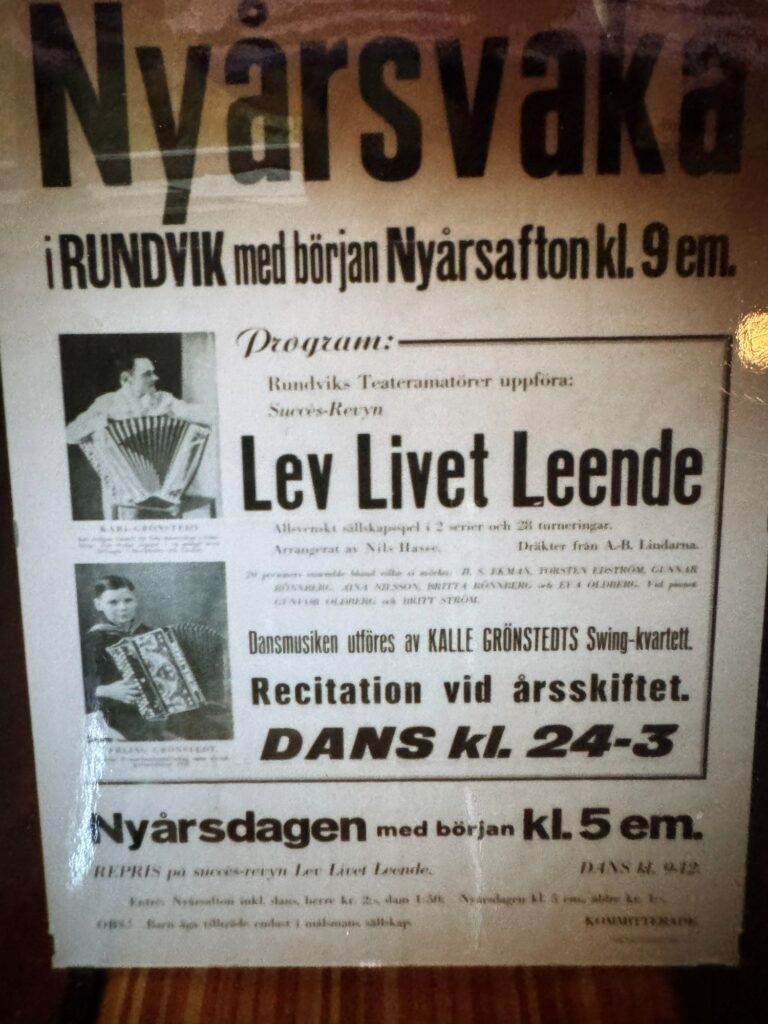
New Year’s Eve in Rundvik – dance music by Kalle Grönstedt’s Swing Quartet, with little brother Erling.
From the family papers
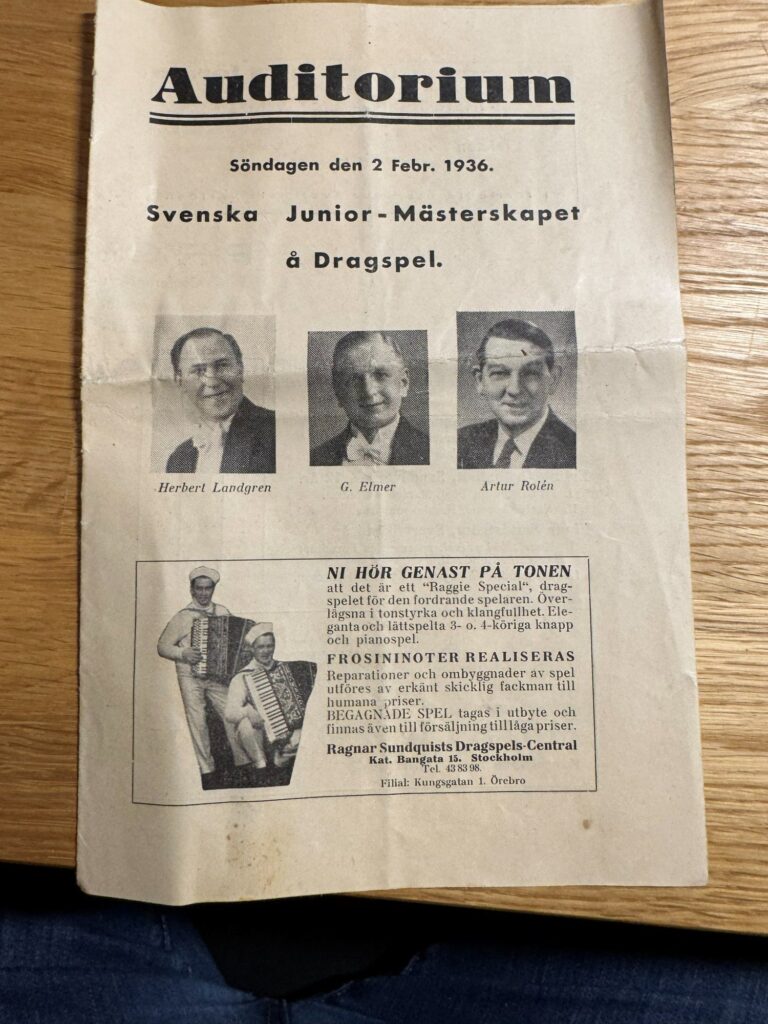
The programme from Sweden’s first junior accordion championship, Auditorium, 2 February 1936.
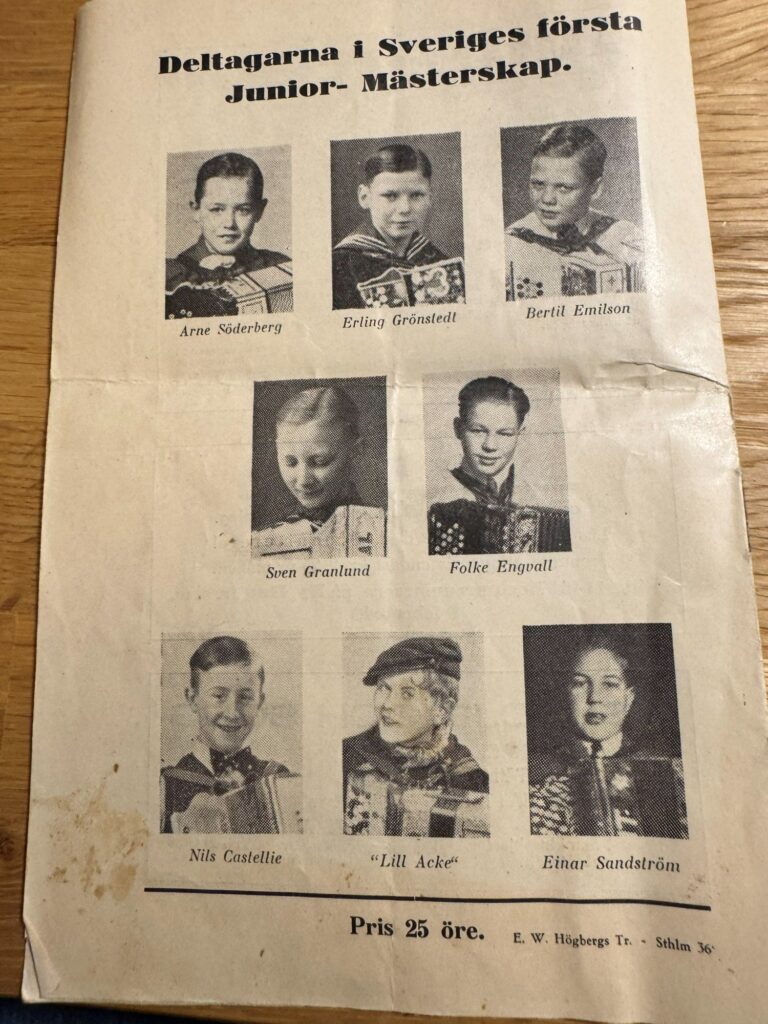
The eight competitors – Erling top centre.
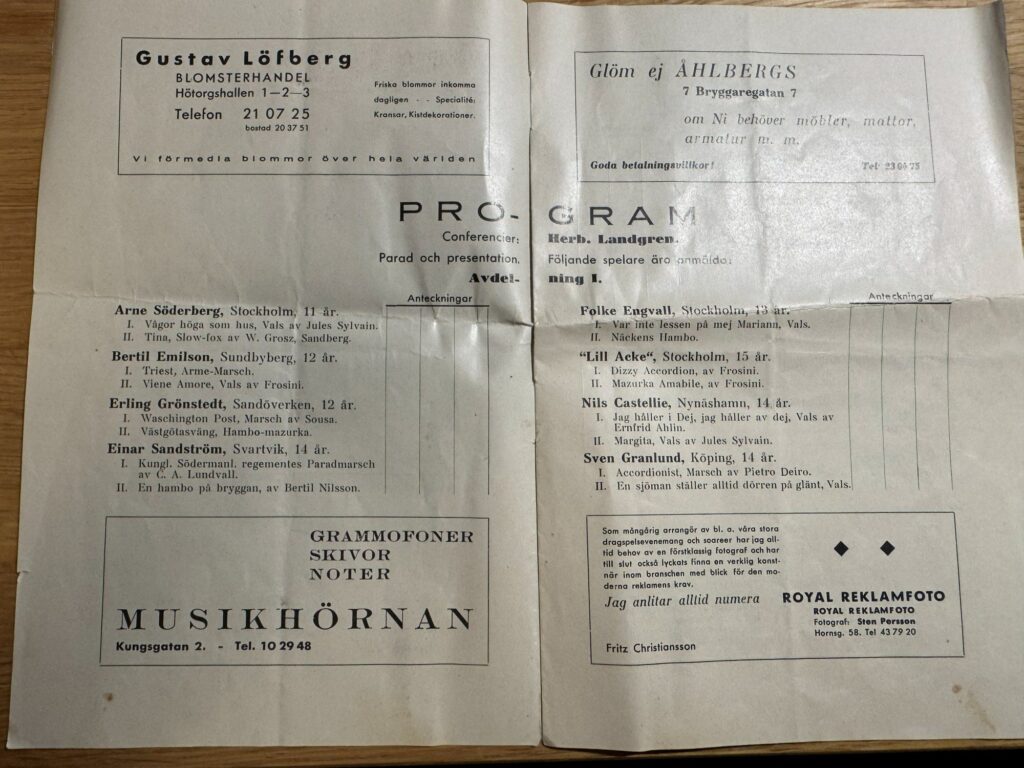
From the programme: “Erling Grönstedt, Sandöverken, 12 years” – Sandöverken was Lugnviksstrand’s postal address.
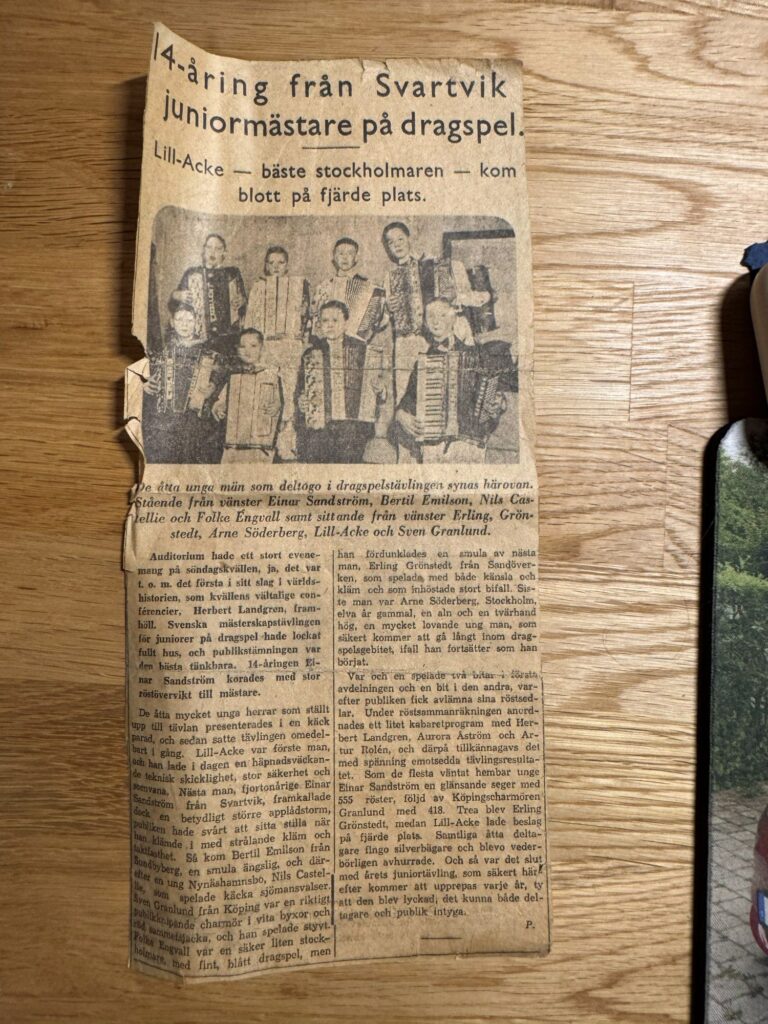
The 1936 report – Einar Sandström won, Erling came third.
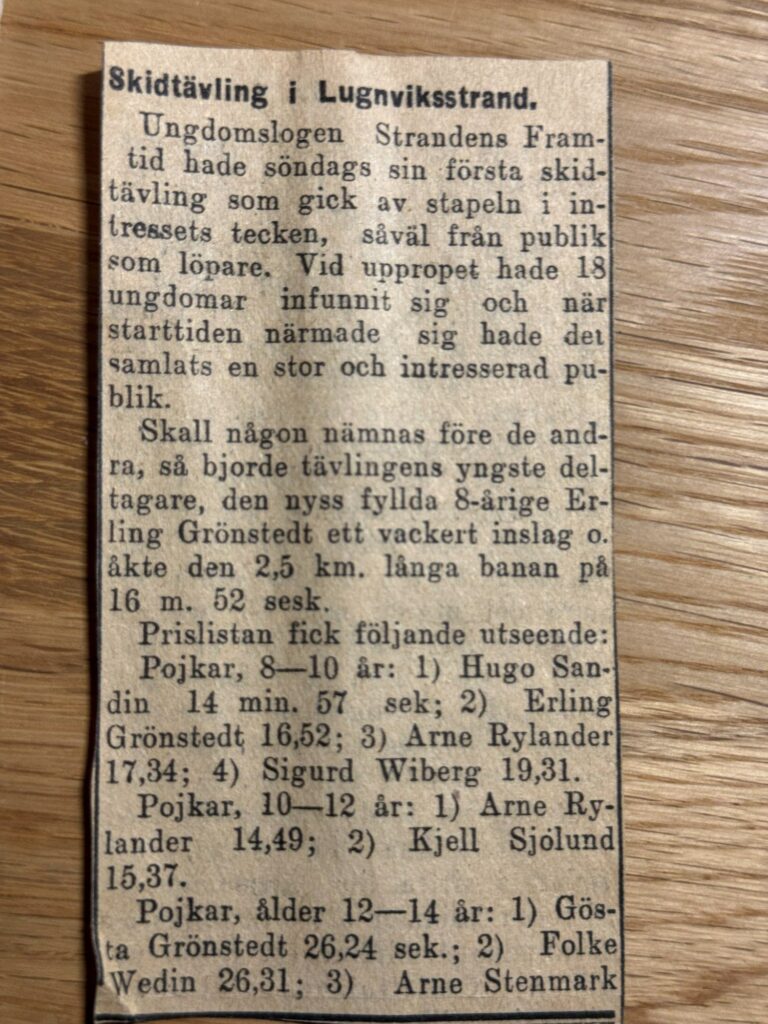
The ski race at Lugnviksstrand – Erling, “just turned 8”, second; Gösta won his class.
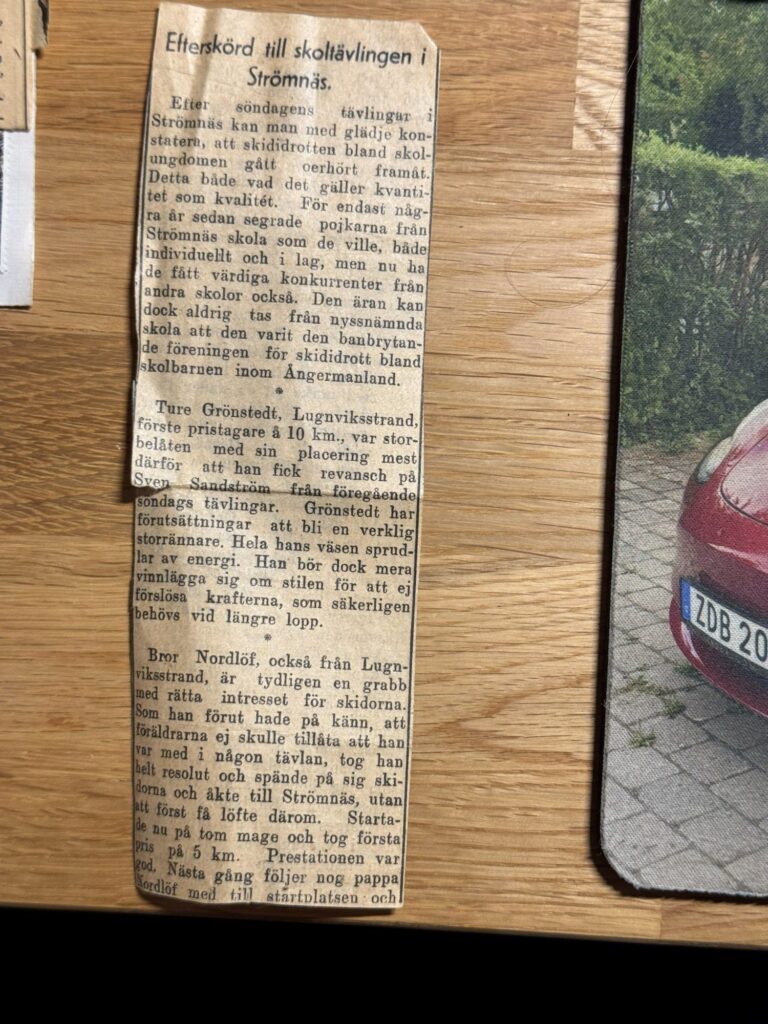
Big brother Ture among the prize-winners over 10 km at Strömnäs.
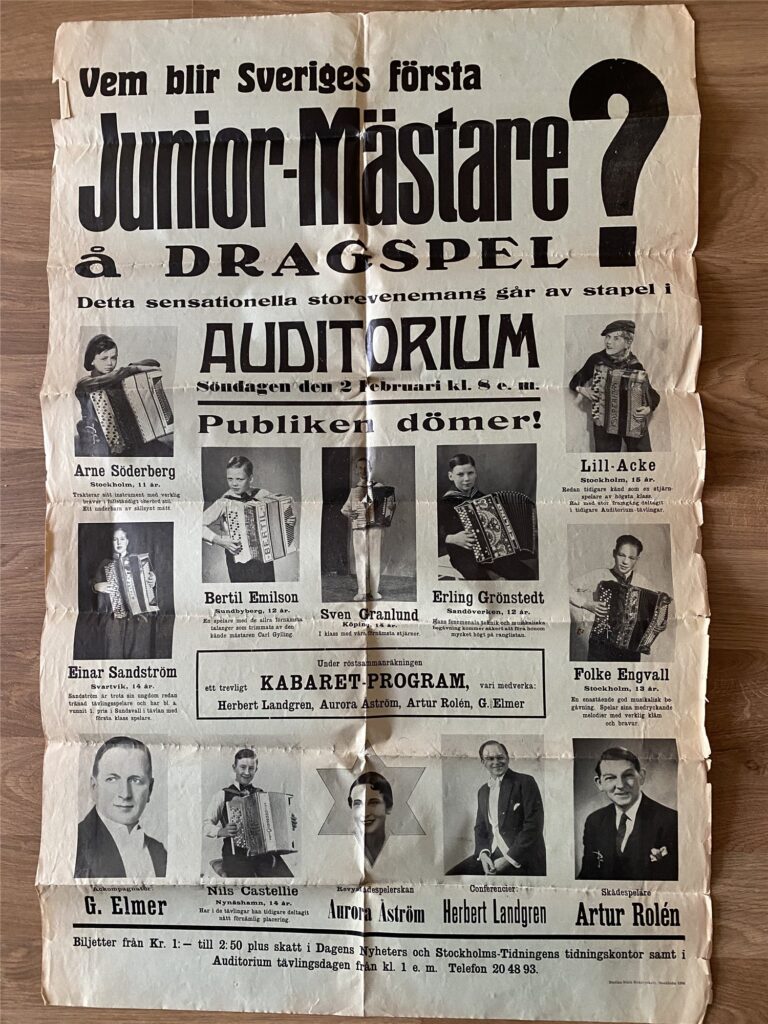
“Who will be Sweden’s first junior champion?” – the poster for the contest at the Auditorium, 1936.
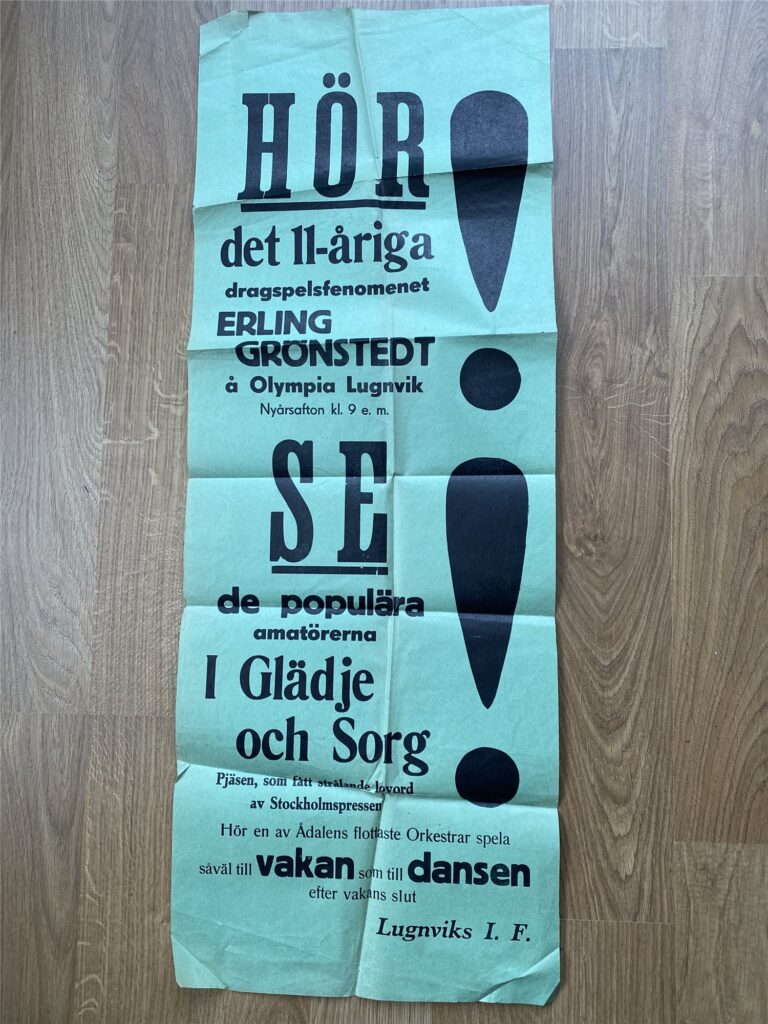
“The 11-year-old accordion phenomenon” – New Year’s Eve at Olympia, Lugnvik.
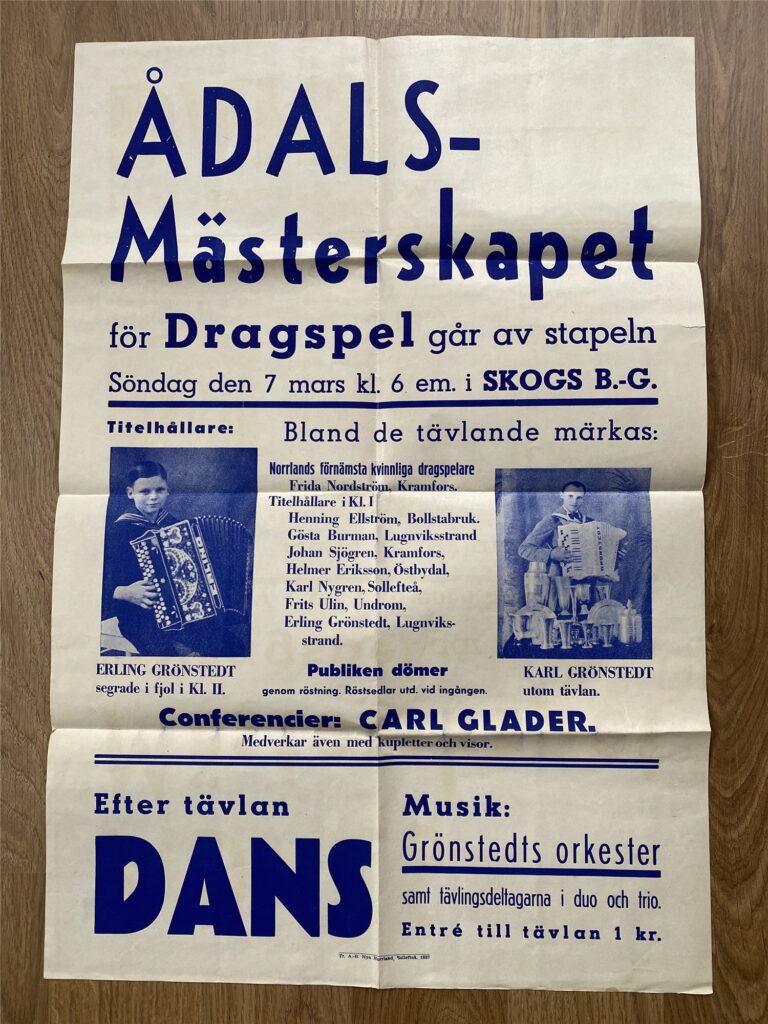
The Ådalen Championship, 7 March 1937. Erling had won class II the year before; Karl played hors concours.
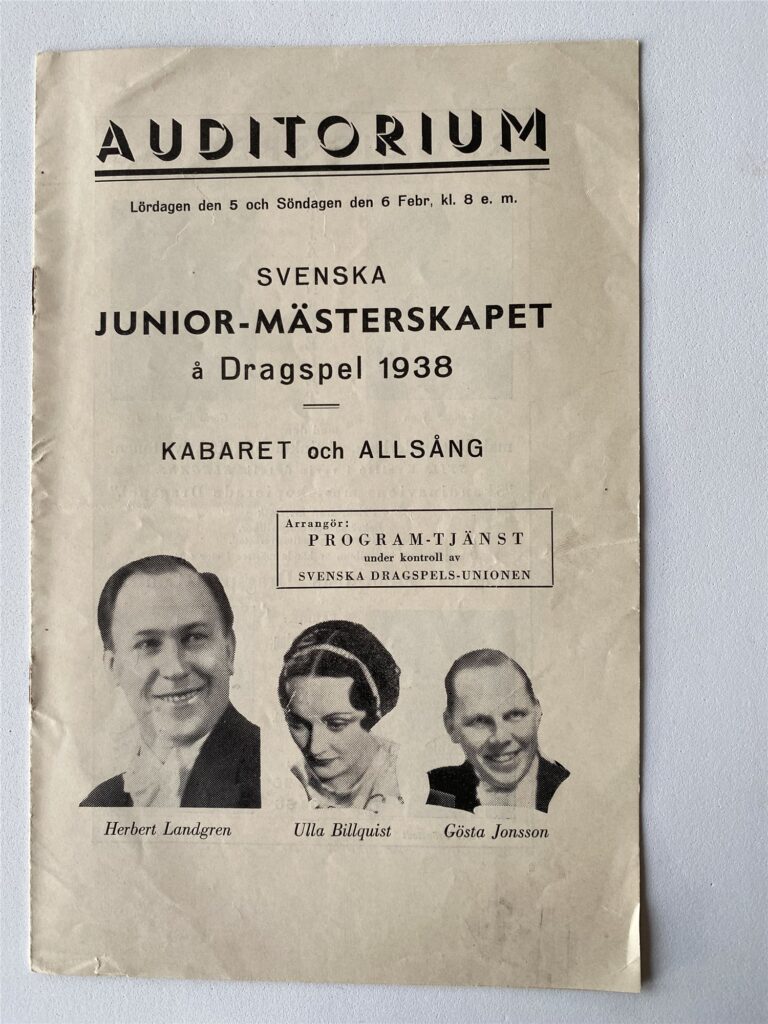
Programme for the Swedish Junior Championship, 5–6 February 1938, hosted by Herbert Landgren.
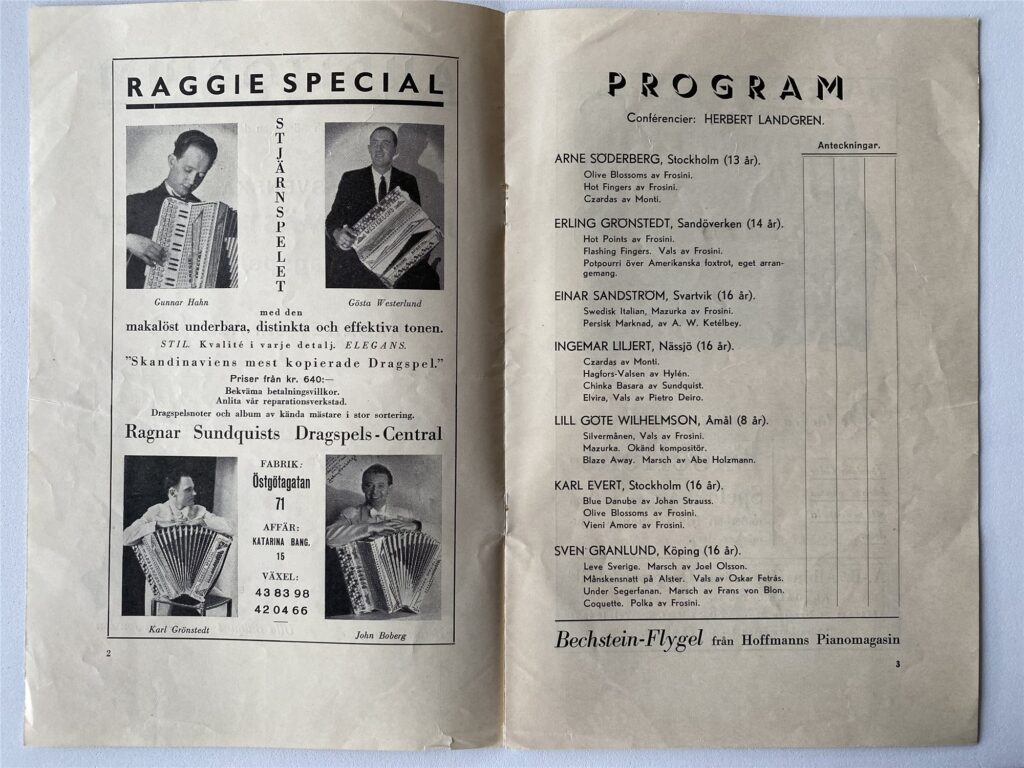
In the 1938 list of contestants: “Erling Grönstedt, Sandöverken (aged 14)” – the year he won.
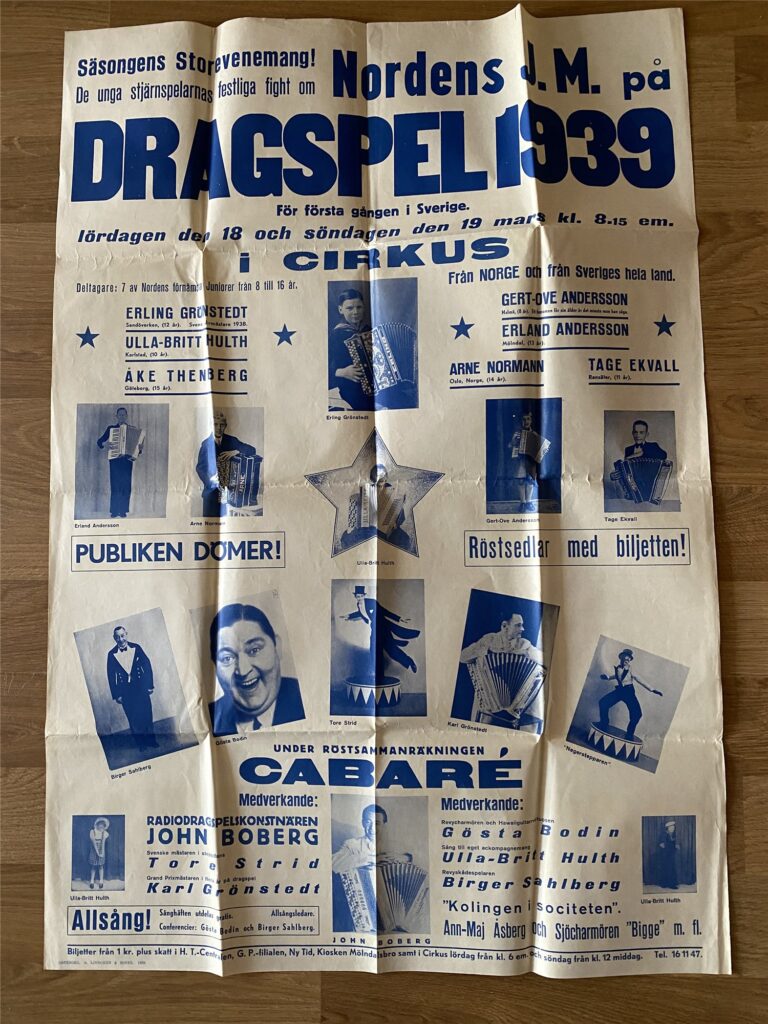
The Nordic Junior Championship, 1939, at Cirkus – the audience picked the winner.
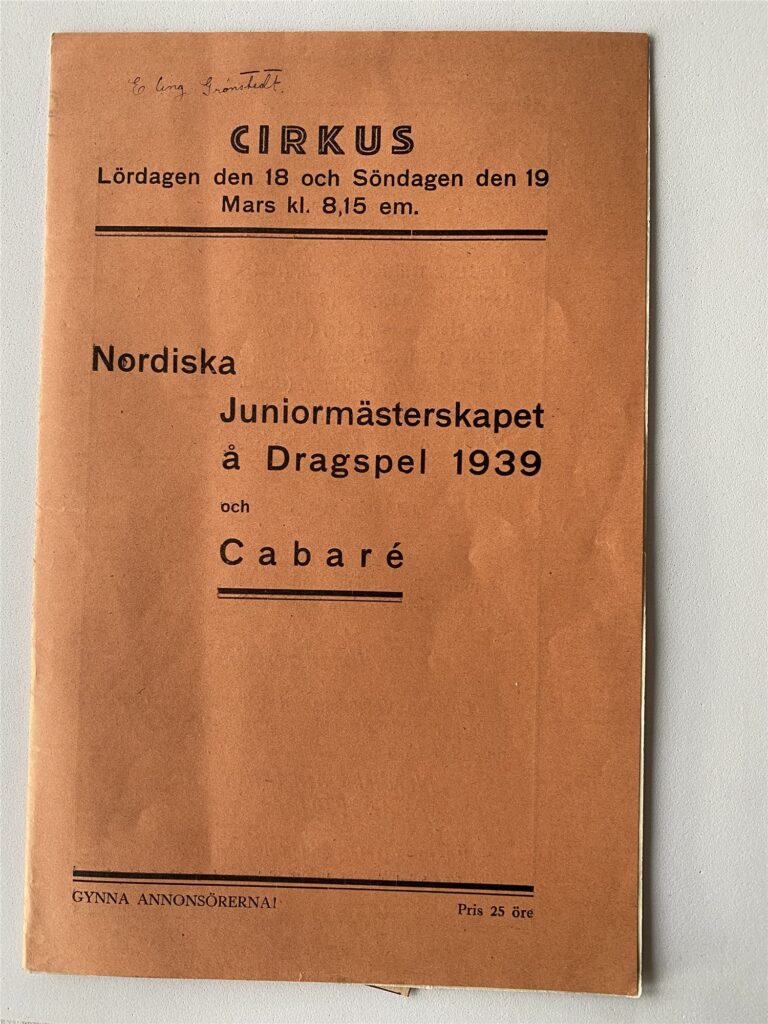
The programme, Cirkus, 18–19 March 1939.
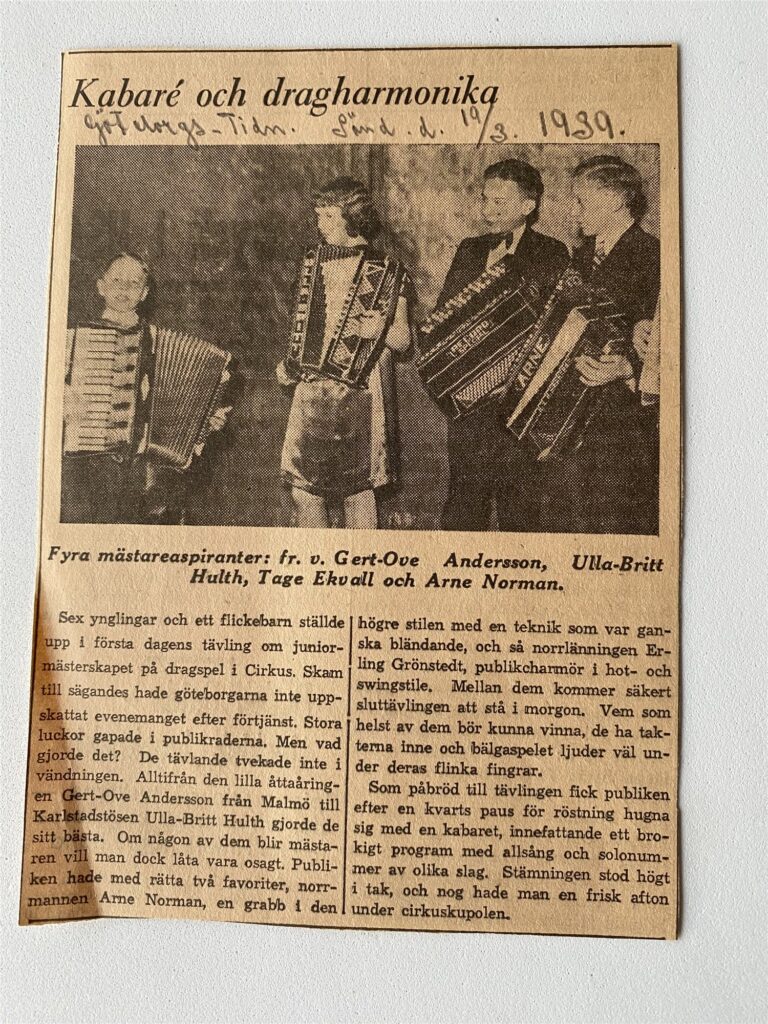
“Cabaret and accordion” – GT, 18 March 1939.
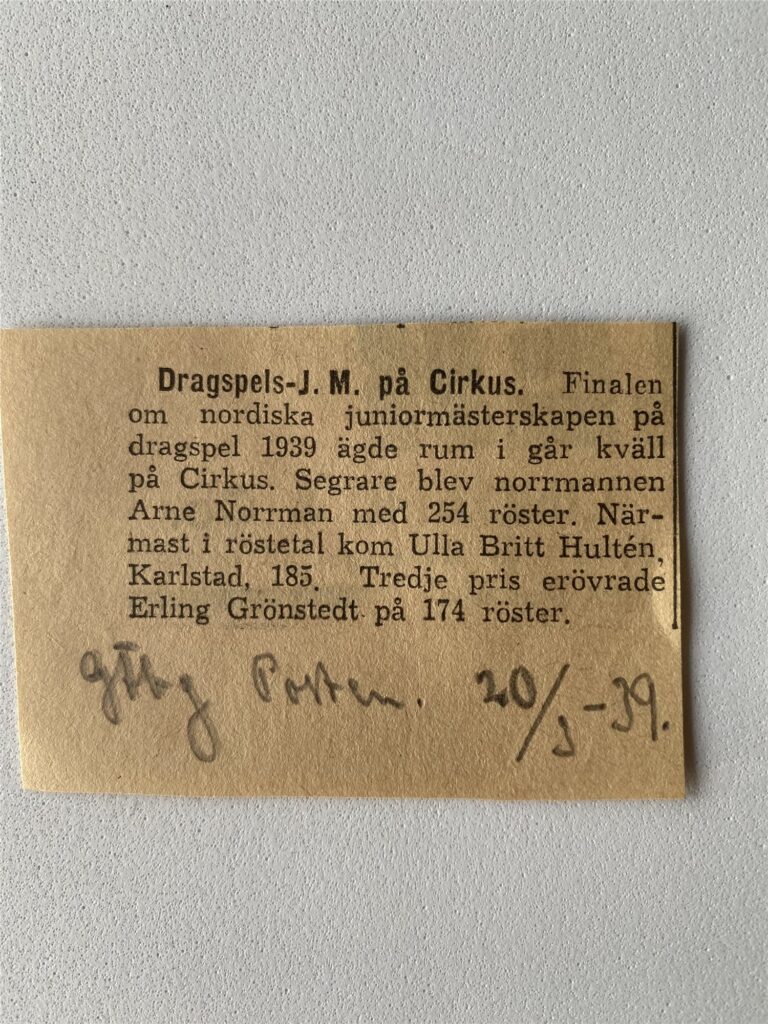
Third prize with 174 votes – Göteborgs-Posten, 20 March 1939.

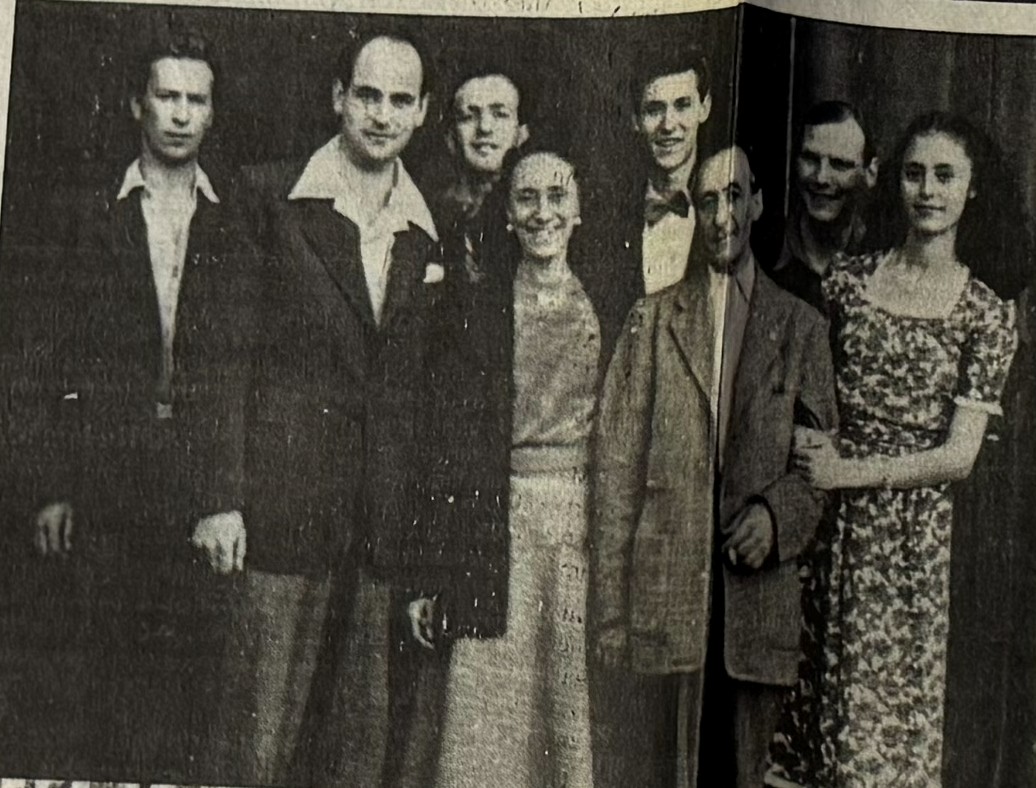
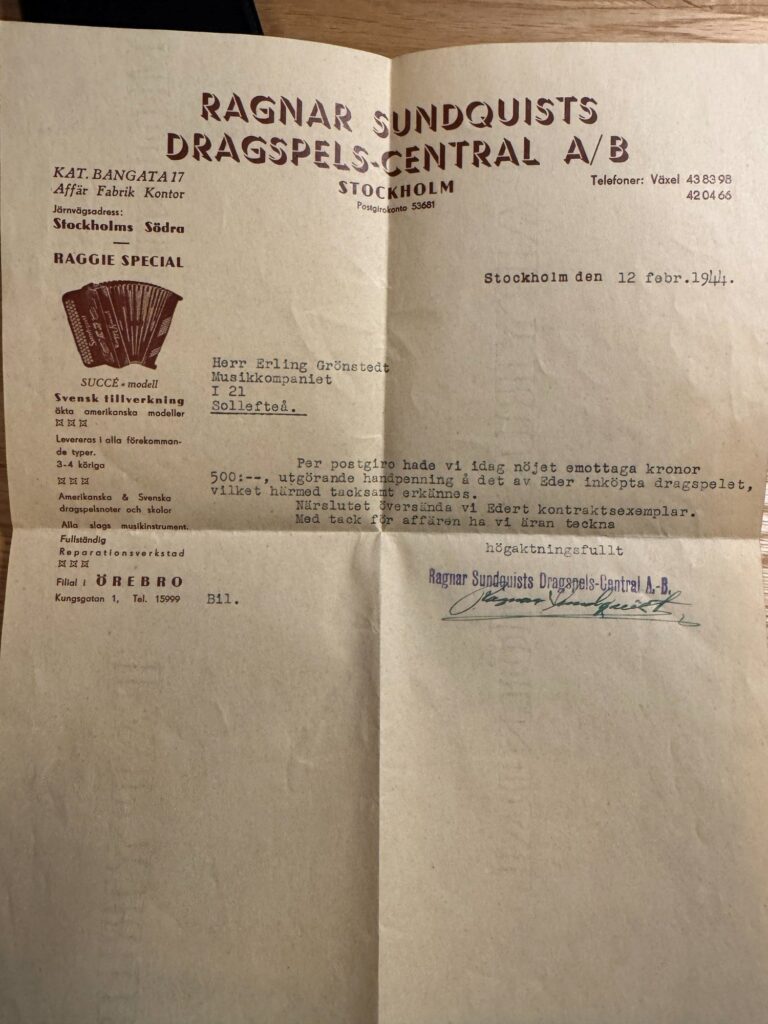
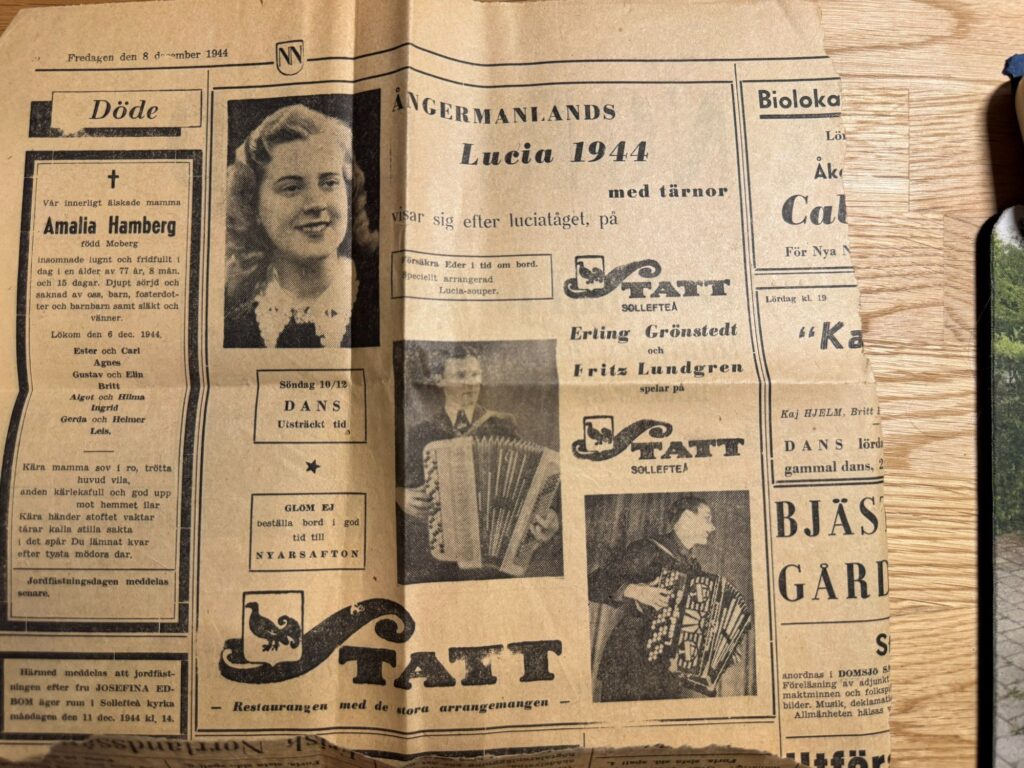
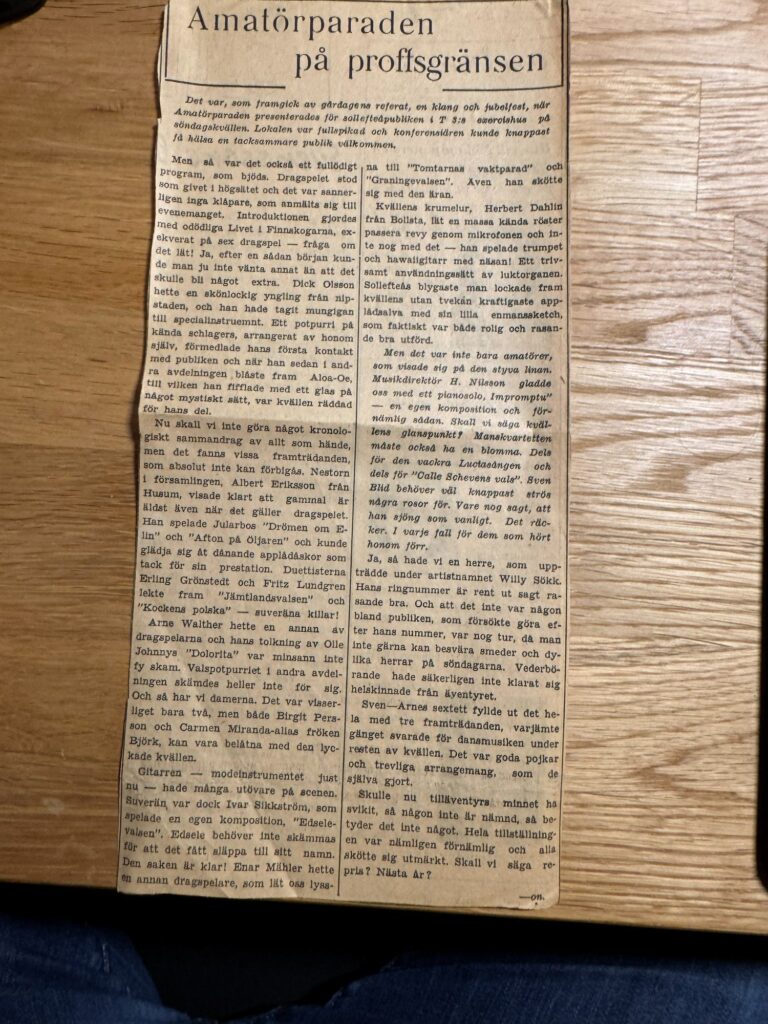
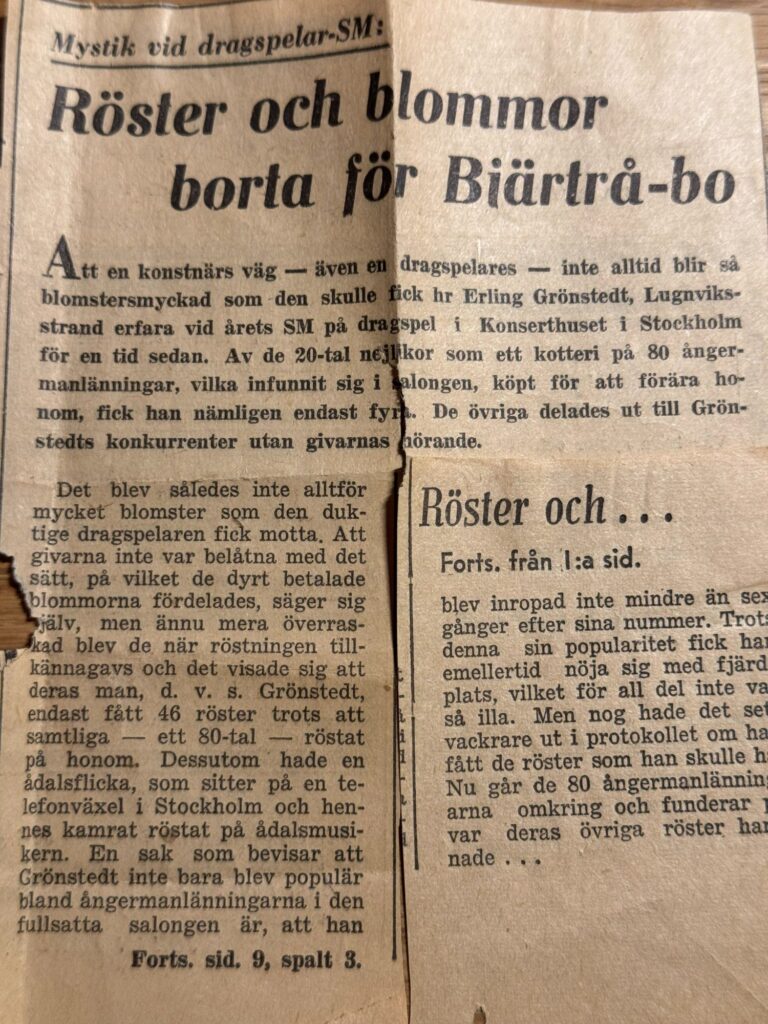
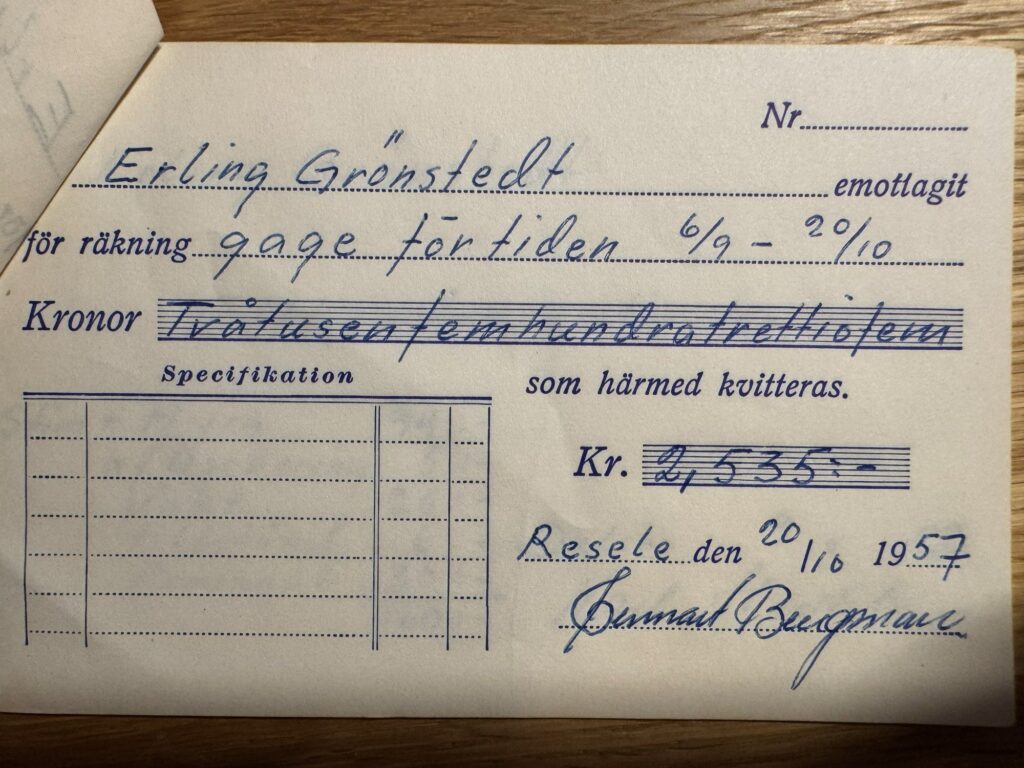
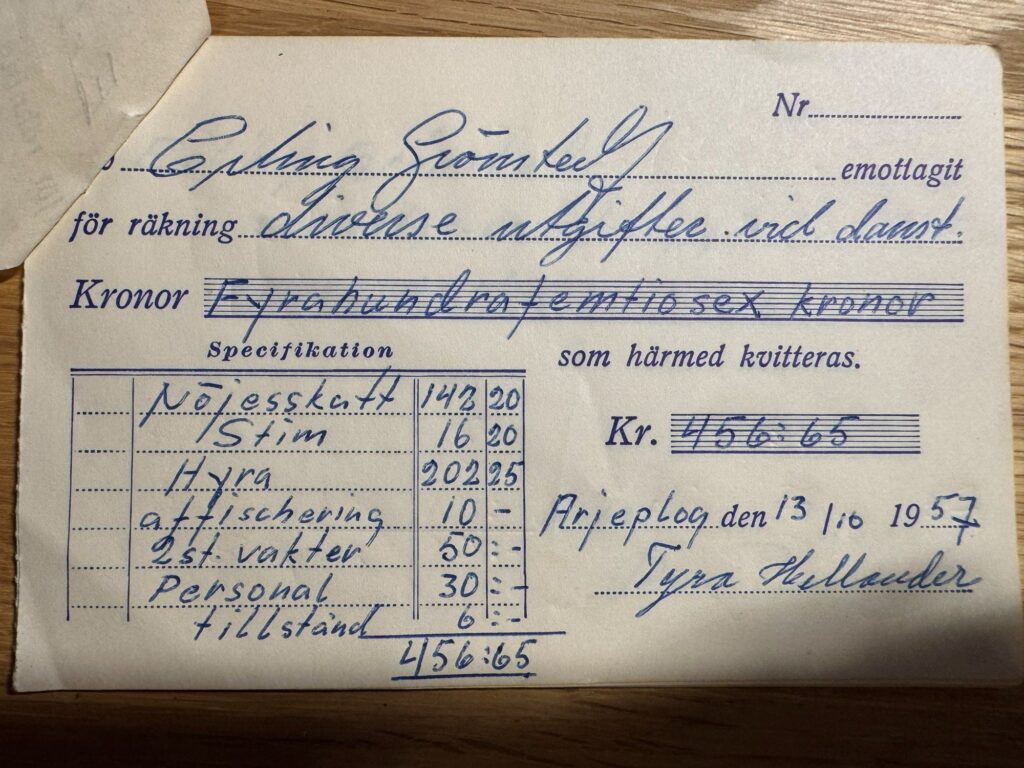
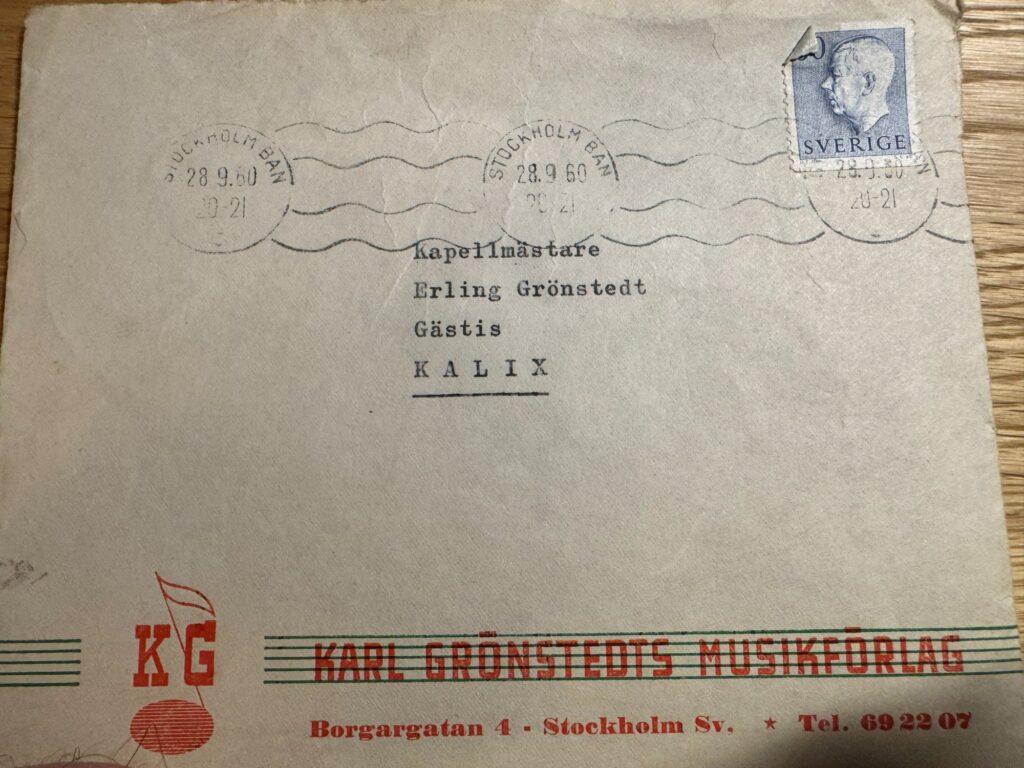

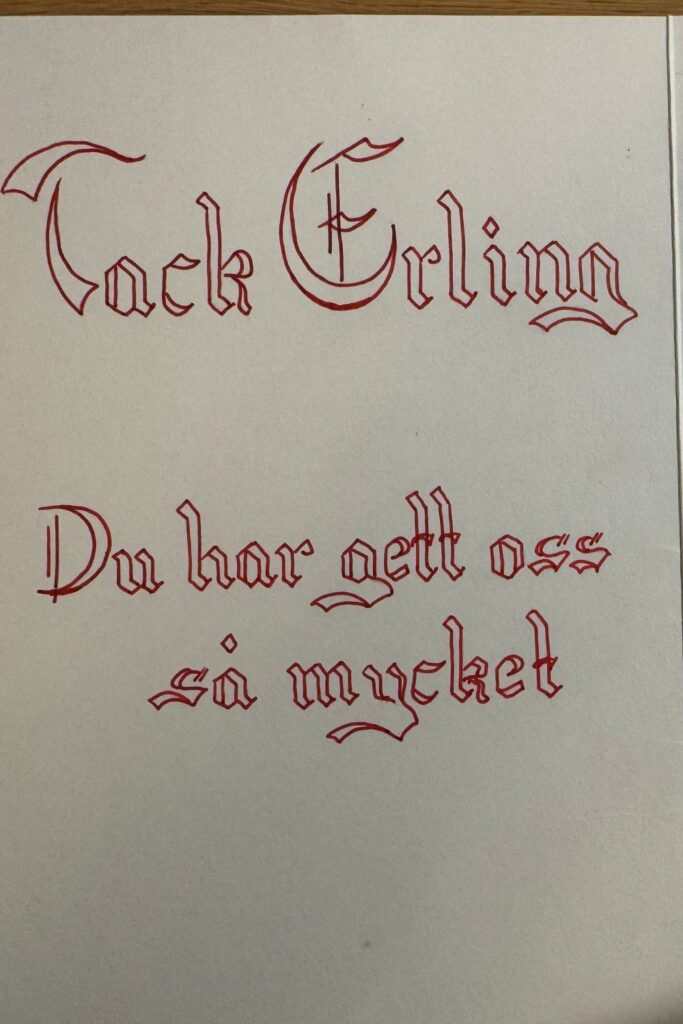

Spring 1939
The first tour – the Femlingarna
In the spring of 1939, at sixteen, Erling set out on his first tour. In his photo album he wrote the heading “Från min första Turné – Våren 1939” (From my first tour – spring 1939) and noted the performers:
John Boberg · Karl Grönstedt · Birger Sahlberg · Tore Strid · Erling Grönstedt
The tour went through the inland of northern Sweden – across the ferry at Meselefors, past log cabins and charcoal kilns around Ramsele, to the art blacksmith Nordling in Trångsviken and on to Frösön and Östersund. Erling wrote the captions himself, and the humor is unmistakable.

“The Femlingarna at the ferry landing in Meselefors”

“Who is the bear? Don’t ask me, I’m asking myself.”

“Charcoal kiln near Ramsele”

“Who is the craziest? Strange photo from Östersund”
The captions are Erling’s own, from his 1939 photo album, translated from Swedish.
Browse Erling’s photo album 1939–1947 →1964
From Lugnviksstrand to Tokyo
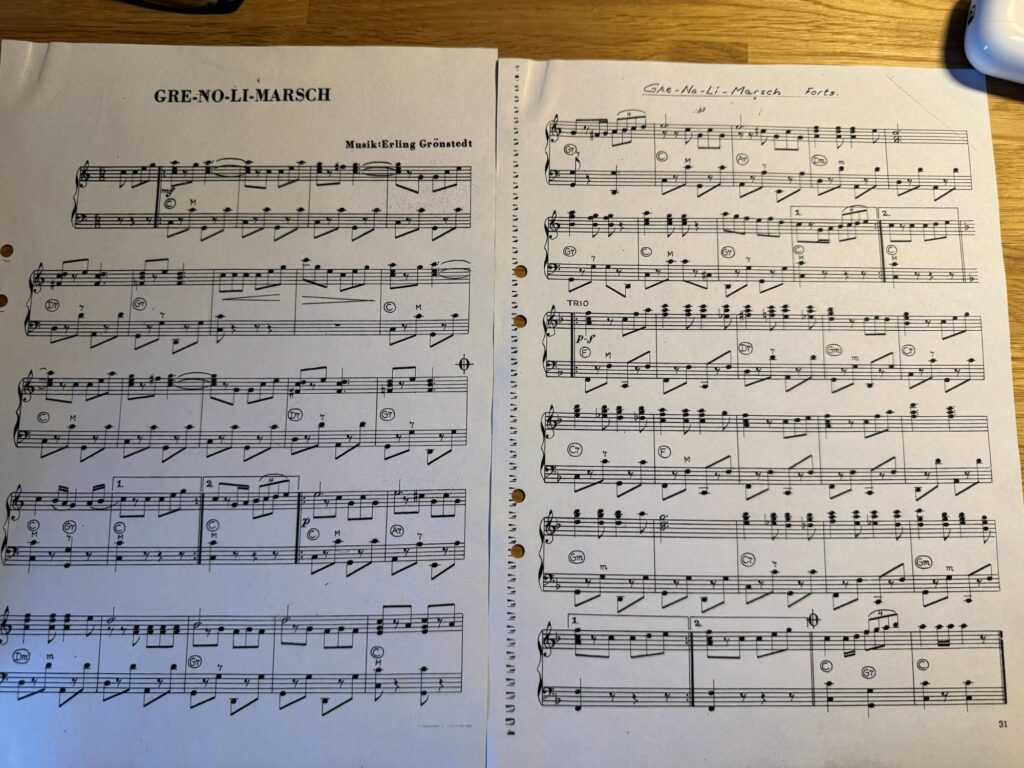
Erling wrote a march for football: the “Gre-No-Li March,” named after Gunnar Gren, Gunnar Nordahl and Nils Liedholm – the Swedish stars who made a sensation at AC Milan – and dedicated to “all the world’s football players.”
The march reached all the way to Japan. According to the Swedish news agency TT, the Japan Football Association adopted it for use at the Olympics and other competitions. On March 31, 1964, NHK, Japan’s public broadcaster, wrote to Erling in Solna. Radio Japan wanted to play his music in the program “Till våra lyssnare i Skandinavien” (To Our Listeners in Scandinavia) on its European service, on Sunday, April 26, 1964, from 9:30 to 9:45 a.m. Swedish time.
But at the Tokyo Olympics that fall, the march was never played.
The news item also reveals that Erling had been a really promising skier as a young man – but with dance gigs from Wednesday to Sunday, there was not much energy left for sports.
Sources: TT news item “Erling Grönstedt gör marsch till ’All världens fotboll’” and a letter from Radio Japan (NHK), Tokyo, March 31, 1964 – both in the family’s possession.

The TT news item about the Gre-No-Li March.

The letter from Radio Japan (NHK), Tokyo, March 31, 1964. The full text is below.
The letter from Tokyo
Nippon Hōsō Kyōkai, 31 mars 1964
The original (in English)
Tokyo, March 31st, 1964
Mr. Erling Grönstedt
Liljegatan 3,
Solna, Sverige.
Dear Mr. Grönstedt:
Owing your address to the Japan Soccer Association, we have pleasure of expressing our cordial esteem to your wonderful musical contribution to that sports.
Having a shortwave programme for our listeners in the Scandinavian countries, we are intending to express our sentiment about the matter, by broadcasting it within that programme. We are sure you would also like to hear your music in a programme from a far land.
Anticipating your consent, we hope to lay it in realization as following:
PROGRAMME: Till Våra Lyssnare i Skandinavien,
TRANSMISSION: Radio Japan’s European Service, after its English part.
DATE: April 26th (Sun) between 9:30 and 9:45 a.m. (Stockholm Time)
FREQUENCIES: 11,780 kcs. – 25 m.; 15,135 – 19; 17,875 – 16
In order to have more listeners to your music, we postponed the plan one month later. Please excuse our delay in telling you about this.
Hoping for your favour and satisfaction, we remain,
Sincerely Yours
Tokue Aiba
In charge of the above-mentioned programme
Radio Japan (NHK), Tokyo
Swedish translation
Tokyo den 31 mars 1964
Herr Erling Grönstedt
Liljegatan 3
Solna, Sverige
Bäste herr Grönstedt,
Vi har fått er adress av Japans fotbollsförbund och vill gärna framföra vår varma uppskattning av ert underbara musikaliska bidrag till sporten.
Vi har ett kortvågsprogram för våra lyssnare i de skandinaviska länderna och tänker uppmärksamma saken genom att sända er musik i det programmet. Vi är säkra på att även ni skulle vilja höra er musik i ett program från ett avlägset land.
I förhoppning om ert samtycke planerar vi följande:
PROGRAM: Till våra lyssnare i Skandinavien
SÄNDNING: Radio Japans europeiska sändning, efter den engelska delen
DATUM: söndagen den 26 april, mellan kl. 9.30 och 9.45 (Stockholmstid)
FREKVENSER: 11 780 kHz (25 m), 15 135 kHz (19 m), 17 875 kHz (16 m)
För att fler ska kunna höra er musik har vi skjutit upp planen en månad. Ursäkta att vi meddelar er detta så sent.
Med förhoppning om er välvilja och belåtenhet förblir vi
Med vänlig hälsning
Tokue Aiba
Ansvarig för ovannämnda program
Radio Japan (NHK), Tokyo
Radio and television
Erling on the air
After his radio debut in 1938 Erling returned to the airwaves many times, and in the 1970s he also appeared on television. Two of the programmes are preserved in the family’s papers.
Thores Trekvart (1967)
On 8 November 1967 the radio programme “Thores Trekvart” was recorded for Swedish Radio P3. It went out from 10.00 to 10.45 pm, with a repeat on 11 November. In the running order Erling’s number is the eleventh: “Erling Grönstedt, accordion: Svarta ögon” (Dark Eyes).
Dragspelsälven (1972)
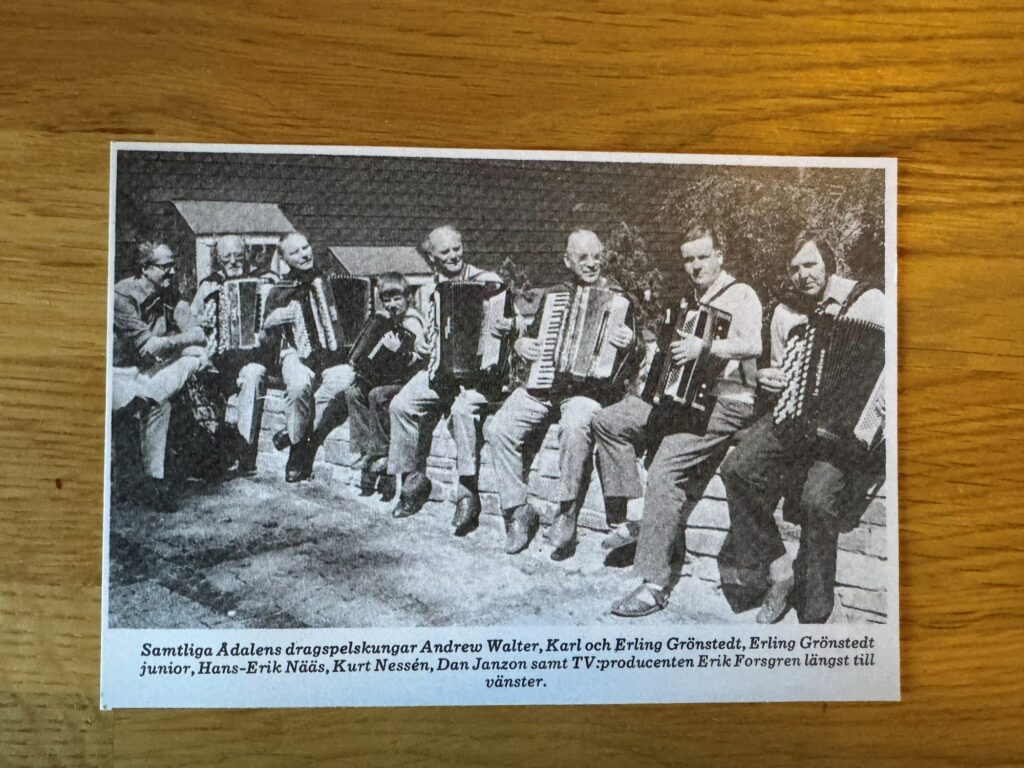
In the summer of 1972 the local paper Nya Norrland wrote about Eric Forsgren’s TV programme “Dragspelsälven” (The Accordion River) about the accordion kings of Ådalen, featuring Karl and Erling, Andrew Walter, Hans-Erik Nääs, Kurt Nessén and Dan Janzon. A sequel followed: “Dragspelsälven slår till igen – the second programme about the accordion kings of Ådalen” was broadcast by Swedish Television on 12 October 1972. It ran for 29 minutes and 39 seconds, was produced by Bertil Hedlund and narrated by Eric Forsgren. The “accordion doctor” August Öberg also took part.
“7-year-old Erling Grönstedt junior plays an accordion.”
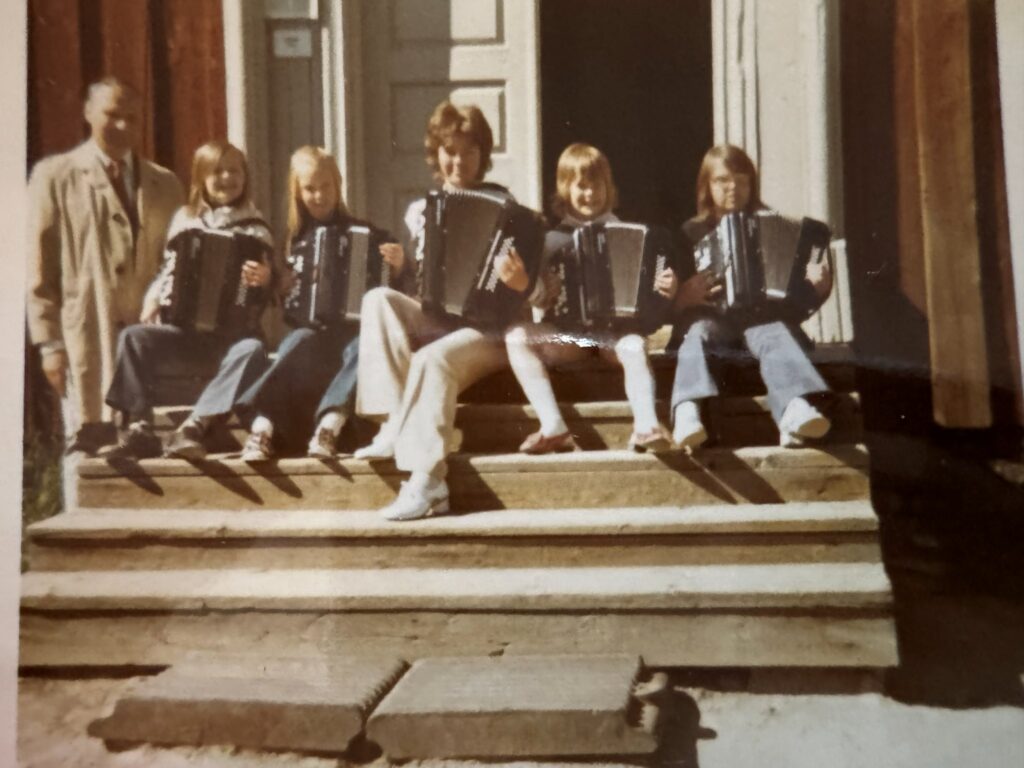
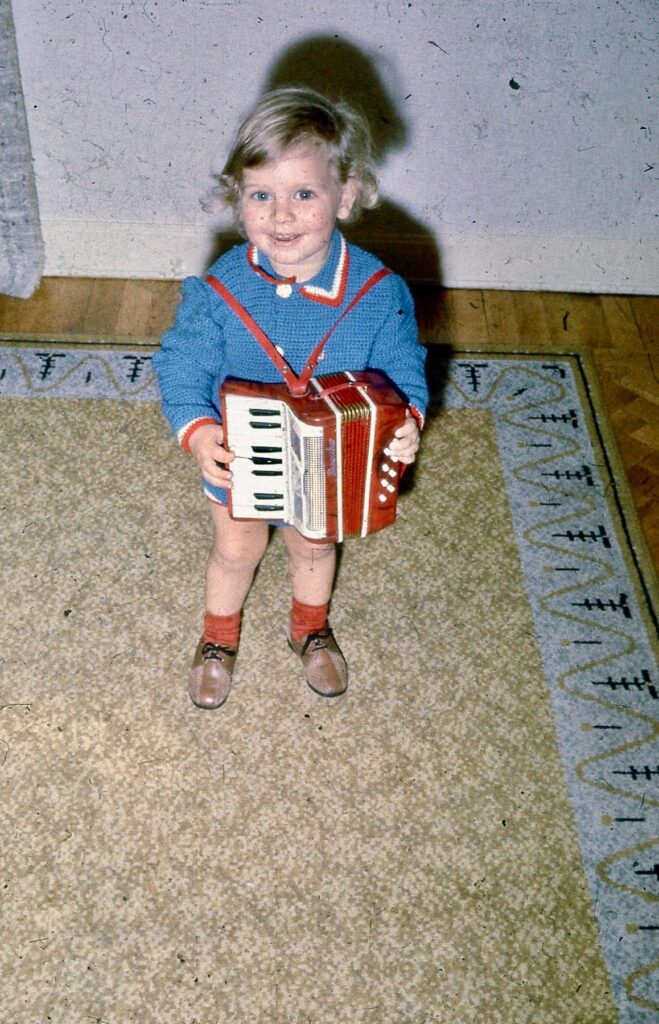
So reads SVT’s archive card. Erling junior is Erling’s son – and the programme showed three generations of Grönstedts playing the accordion. See the photos from 1972.
Sources: the running order for Thores Trekvart (1967), Nya Norrland 27 June 1972 and SVT’s archive card for the programme (prod. no. 34-71/8016) – all in the family’s possession.
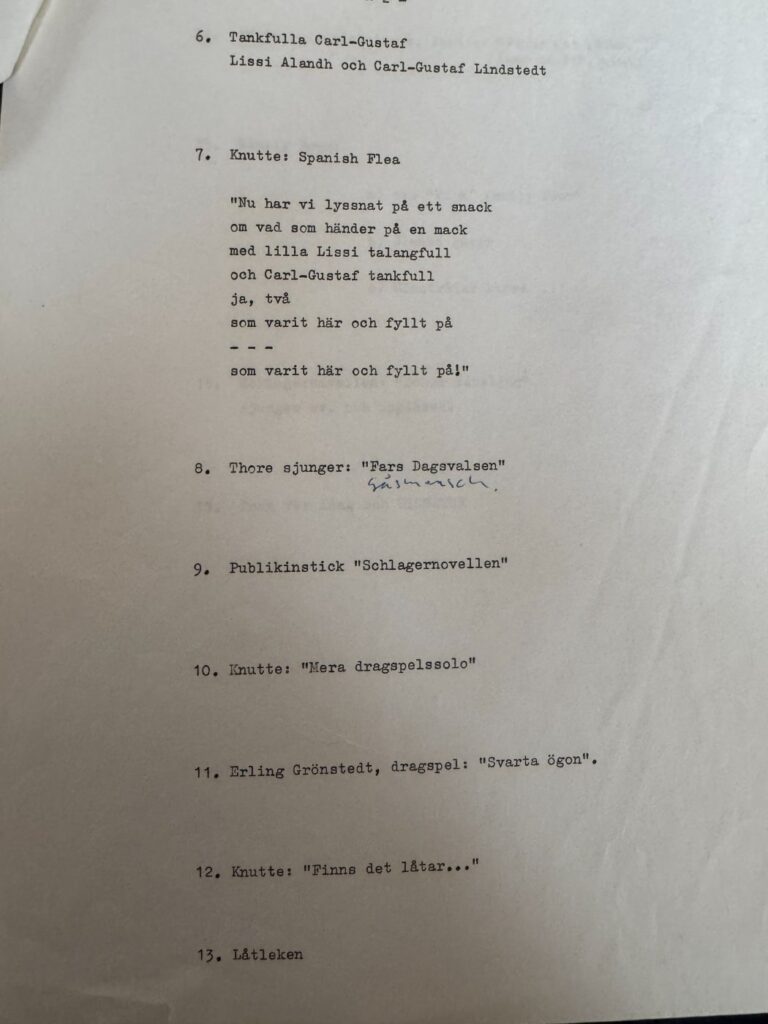
The running order for Thores Trekvart, November 1967. Erling plays “Svarta ögon” as number eleven.
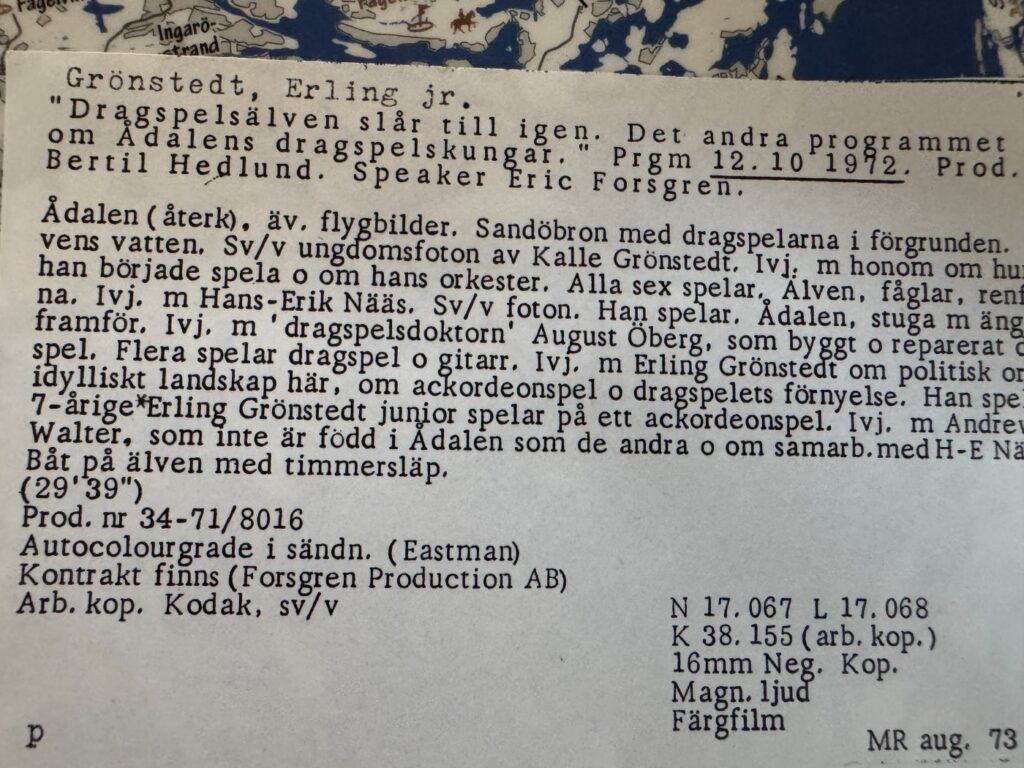
SVT’s archive card for “Dragspelsälven slår till igen”, broadcast on 12 October 1972.
Studio portraits
Erling in the studio
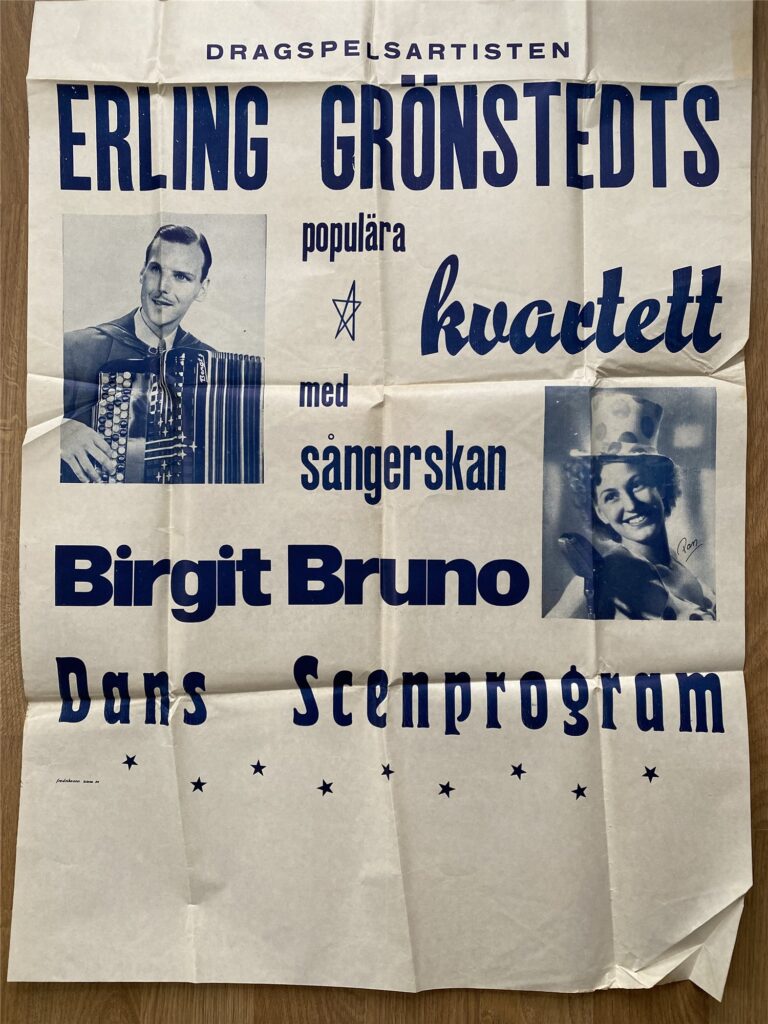
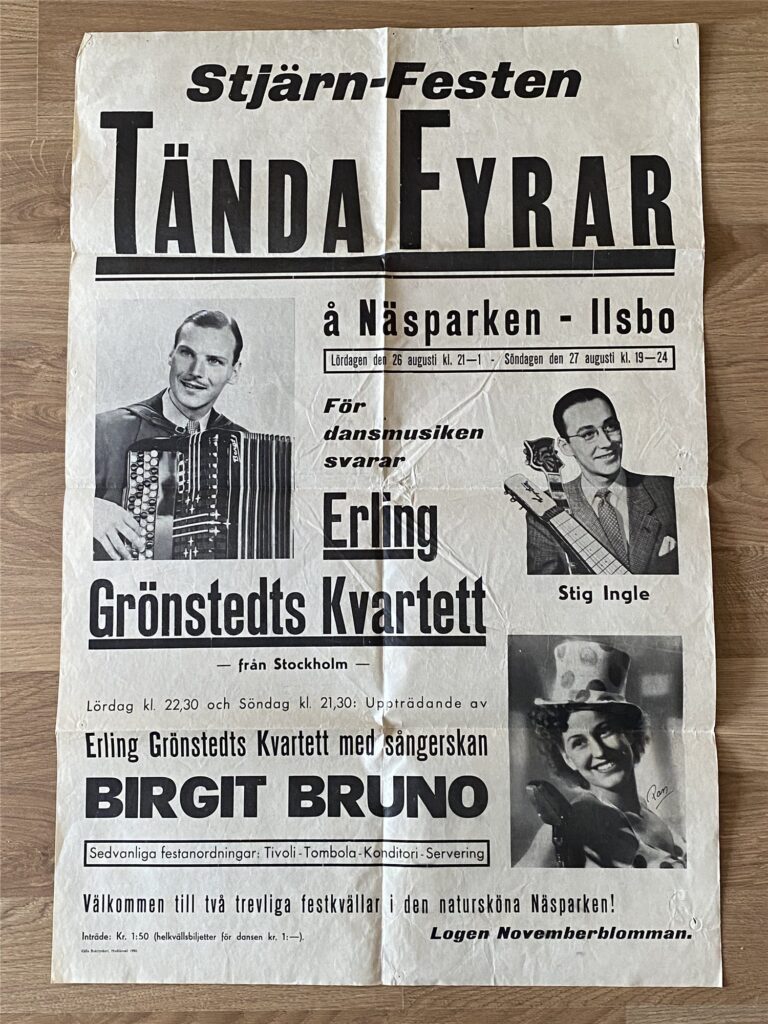
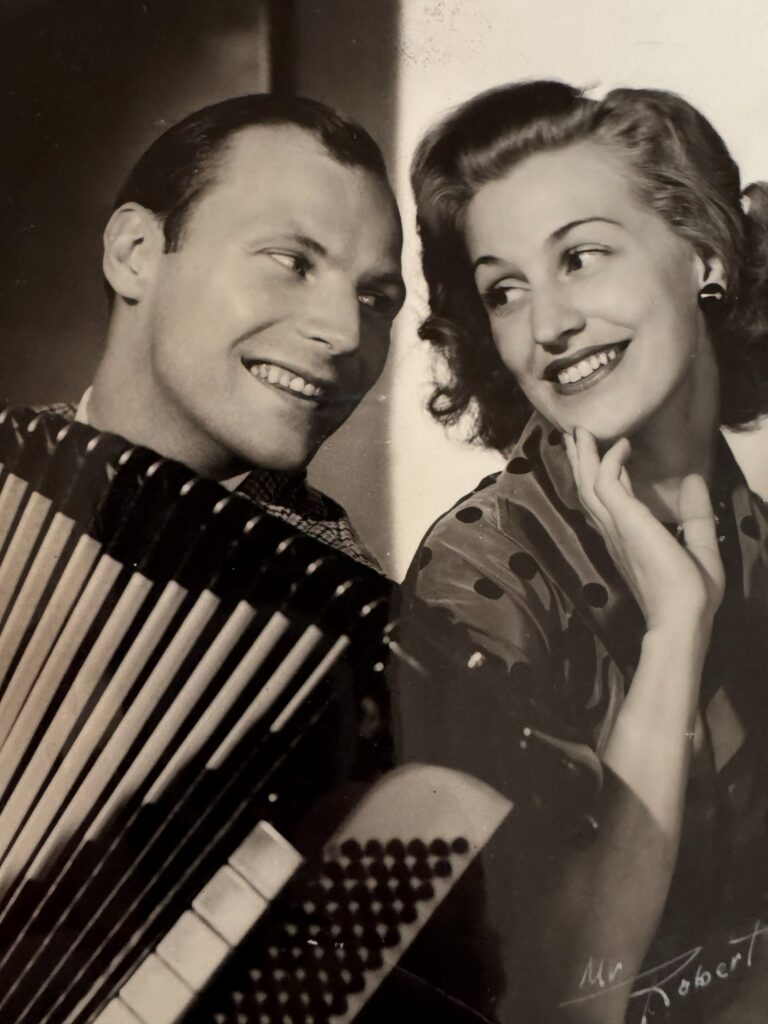
As a touring artist, Erling needed photos for posters, flyers and record sleeves. Here is a selection of his studio portraits from the 1940s and 50s – with the accordion as his constant companion.
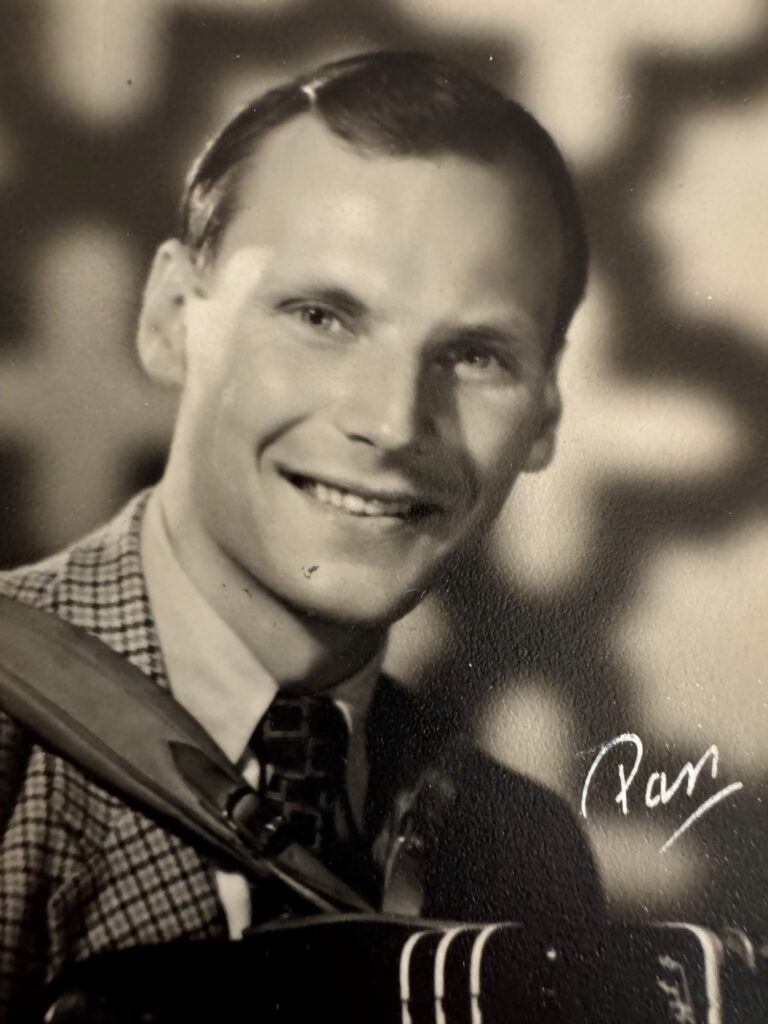
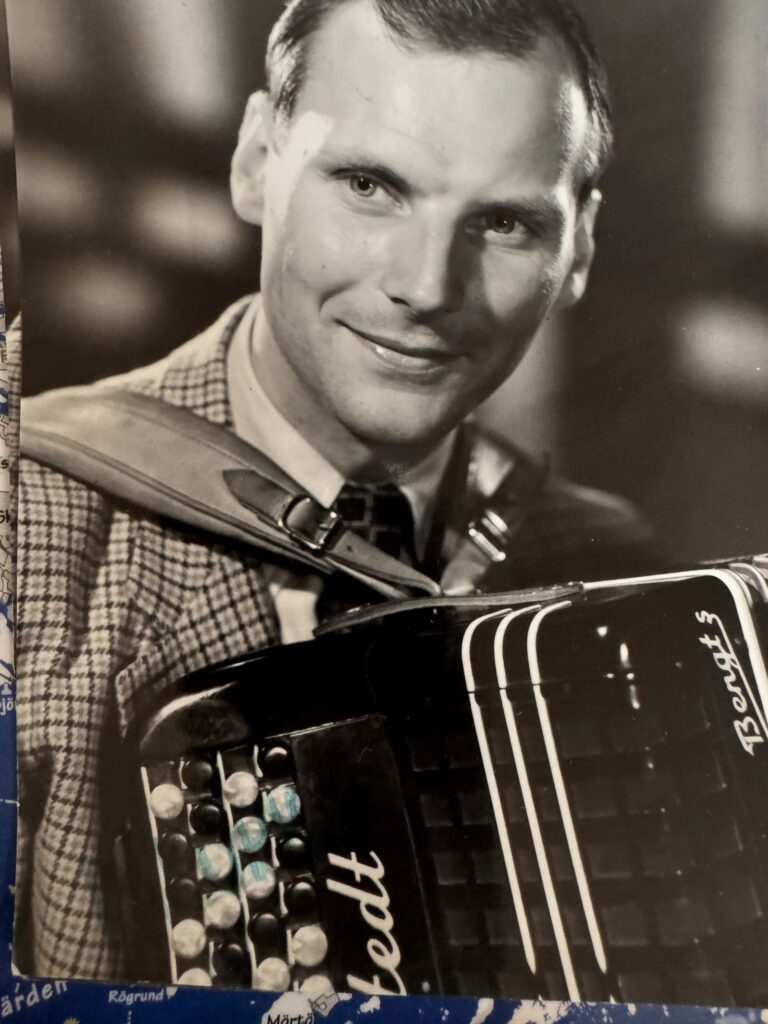
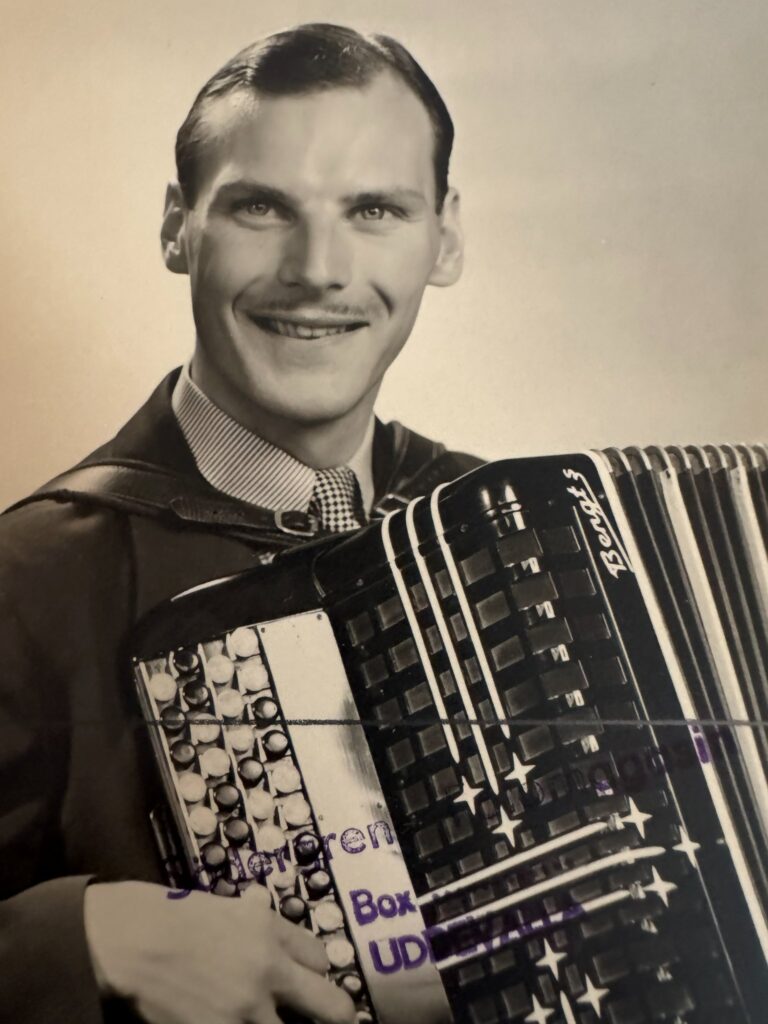
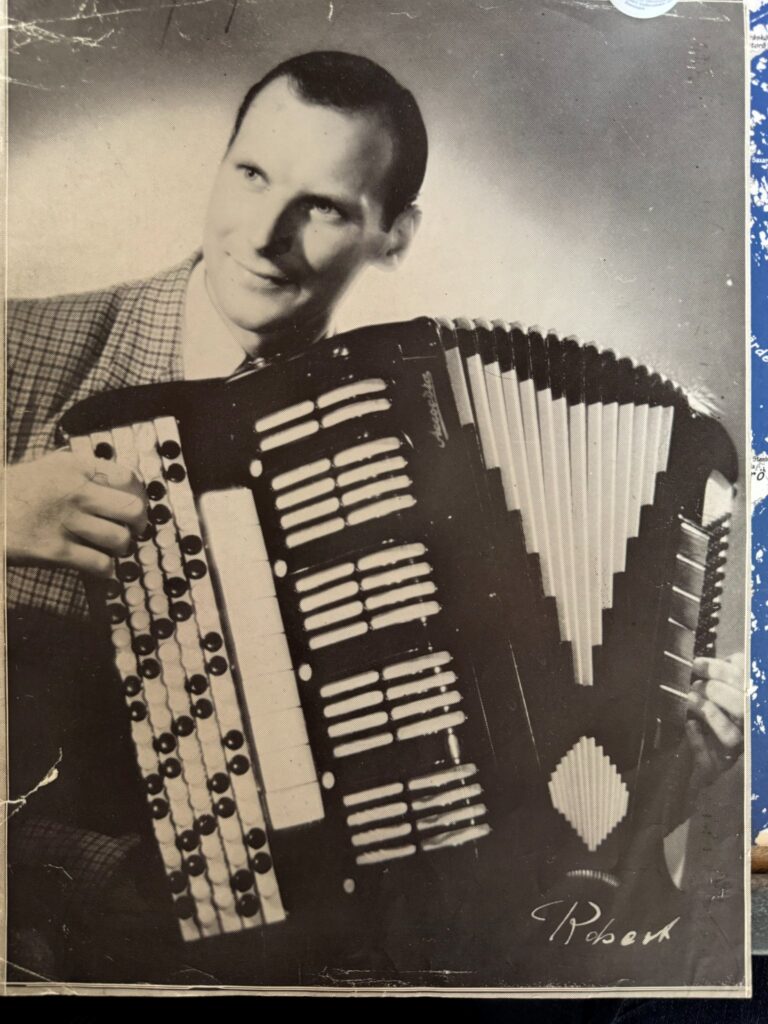
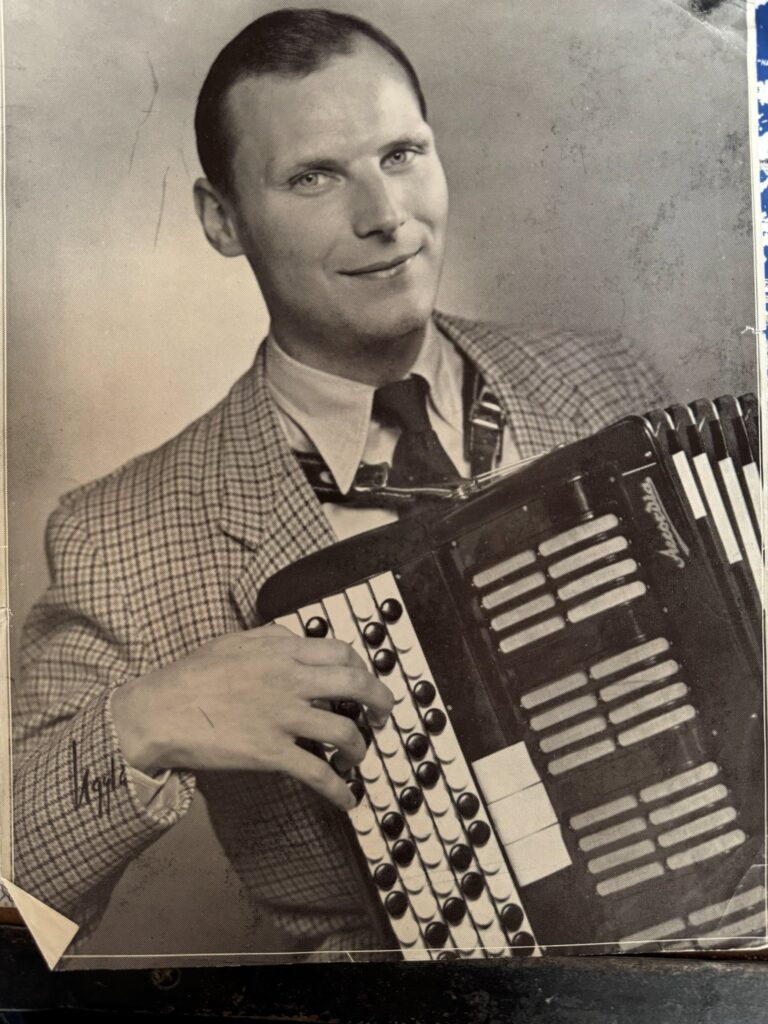
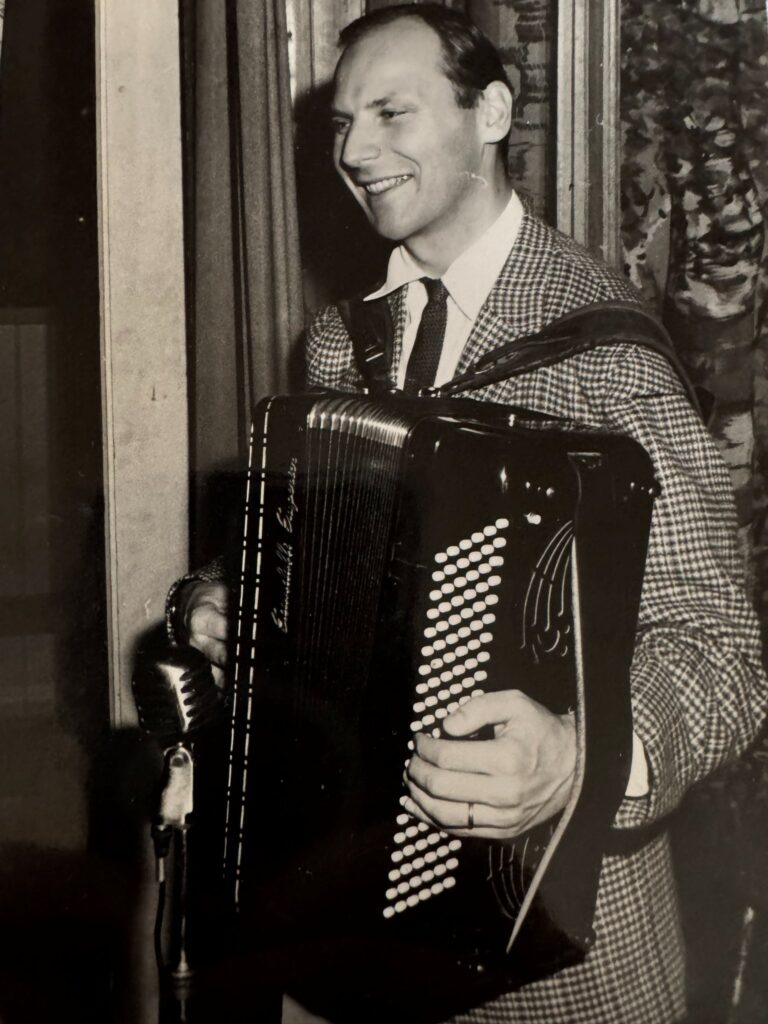
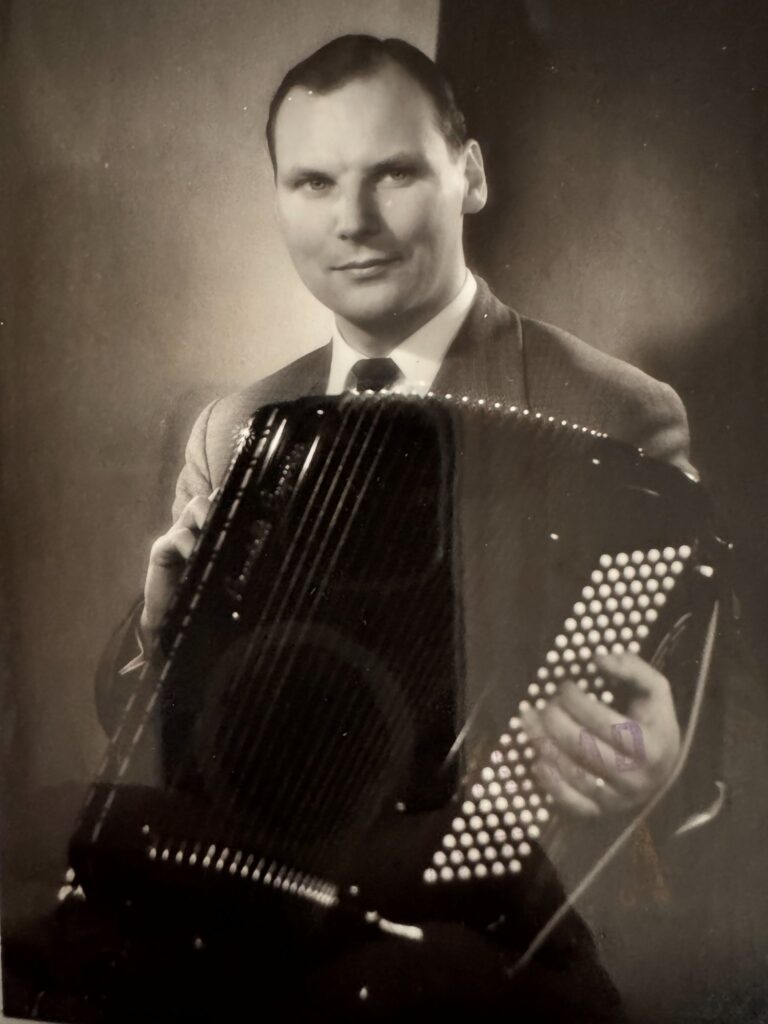
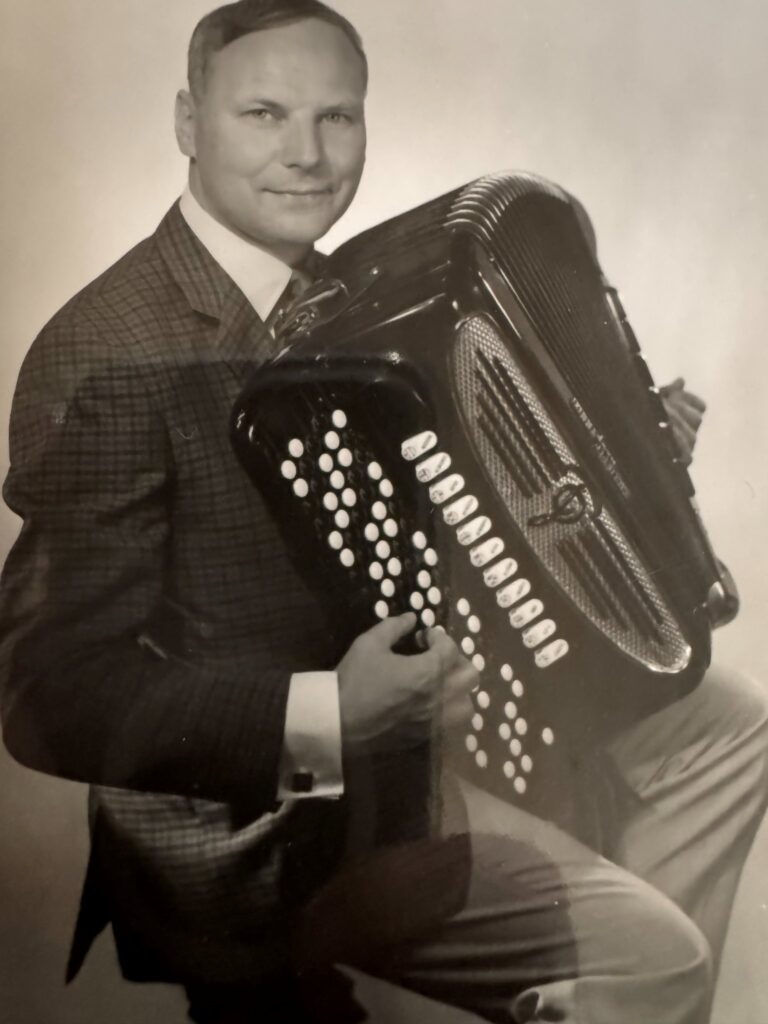
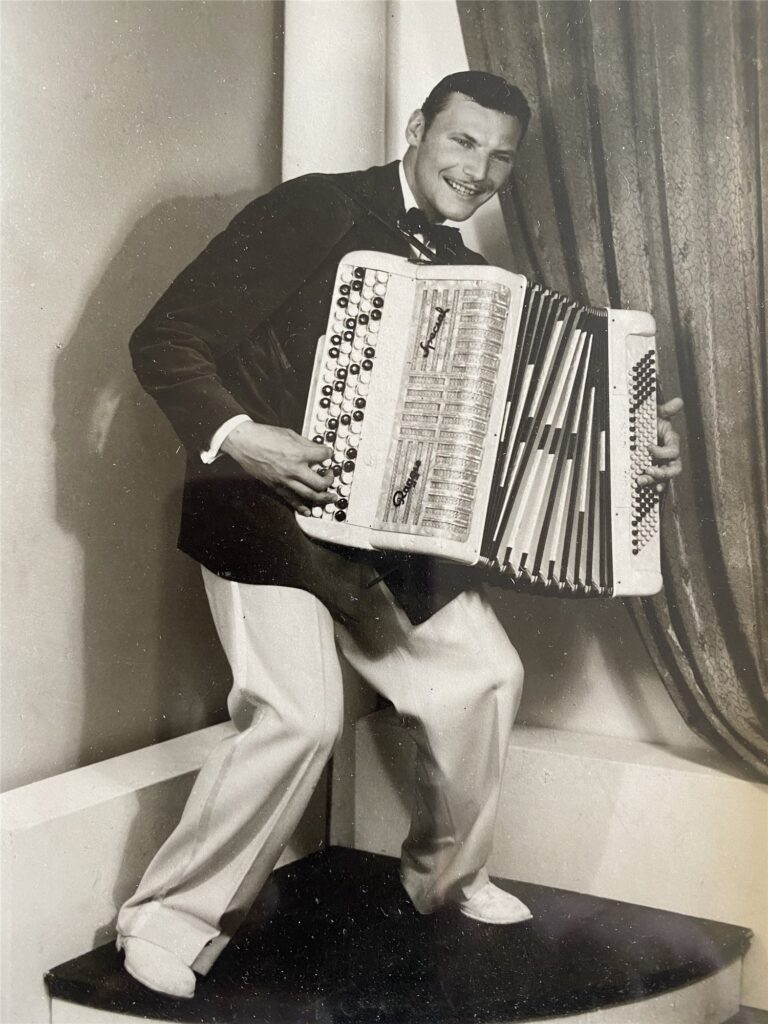
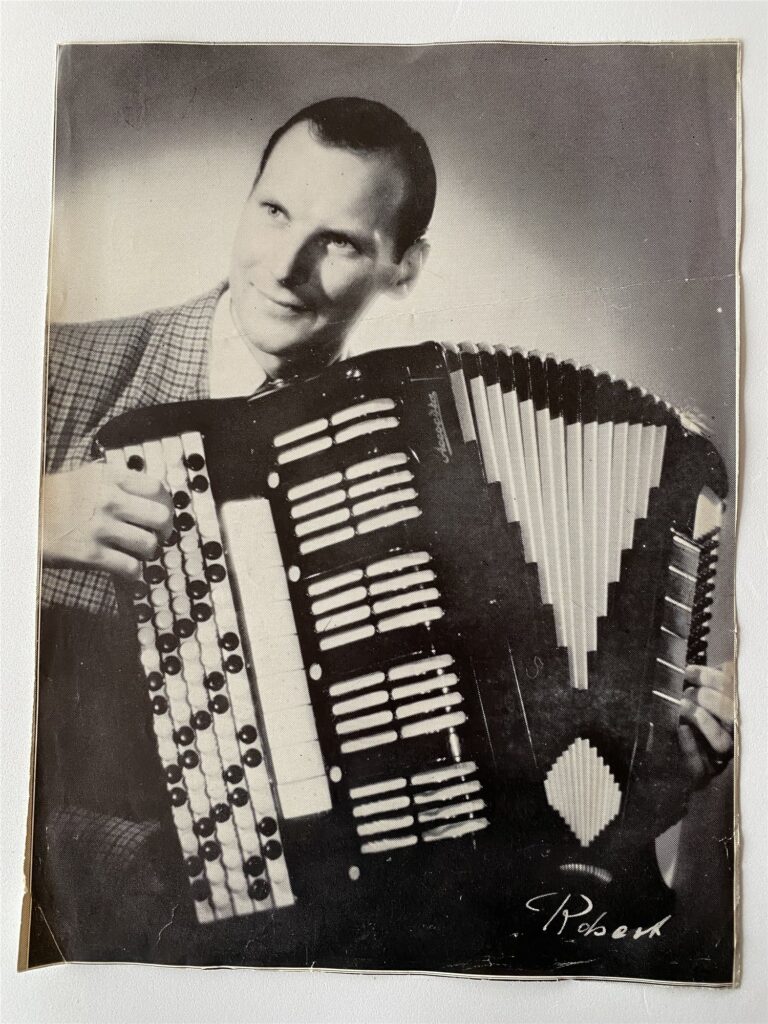
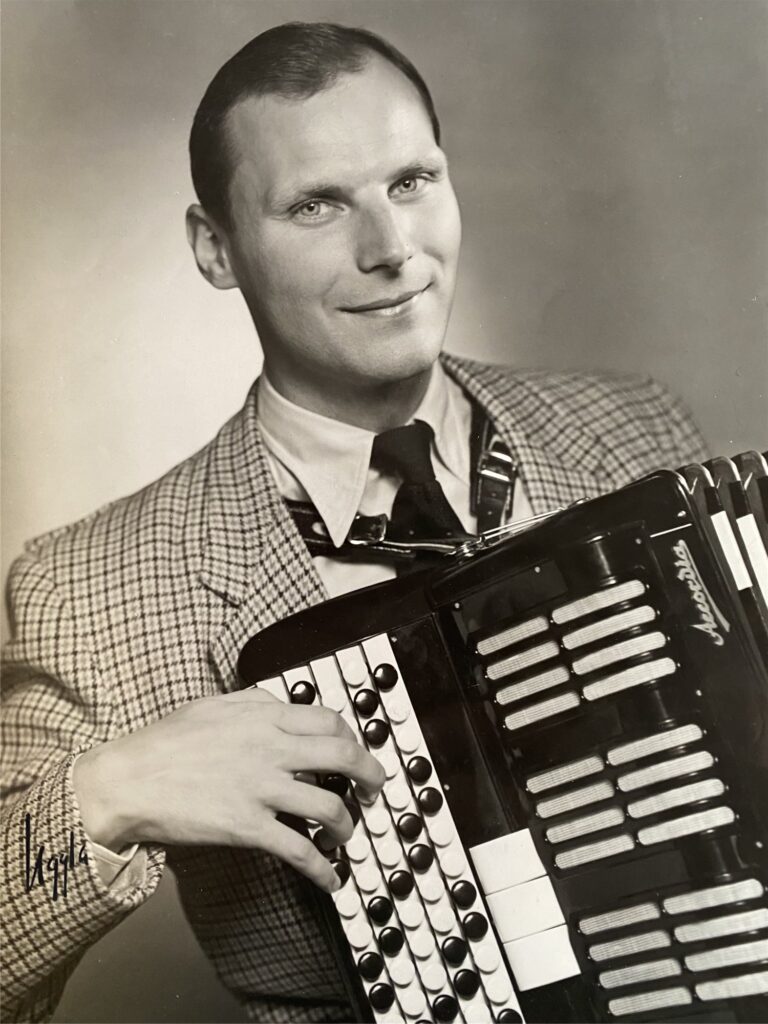
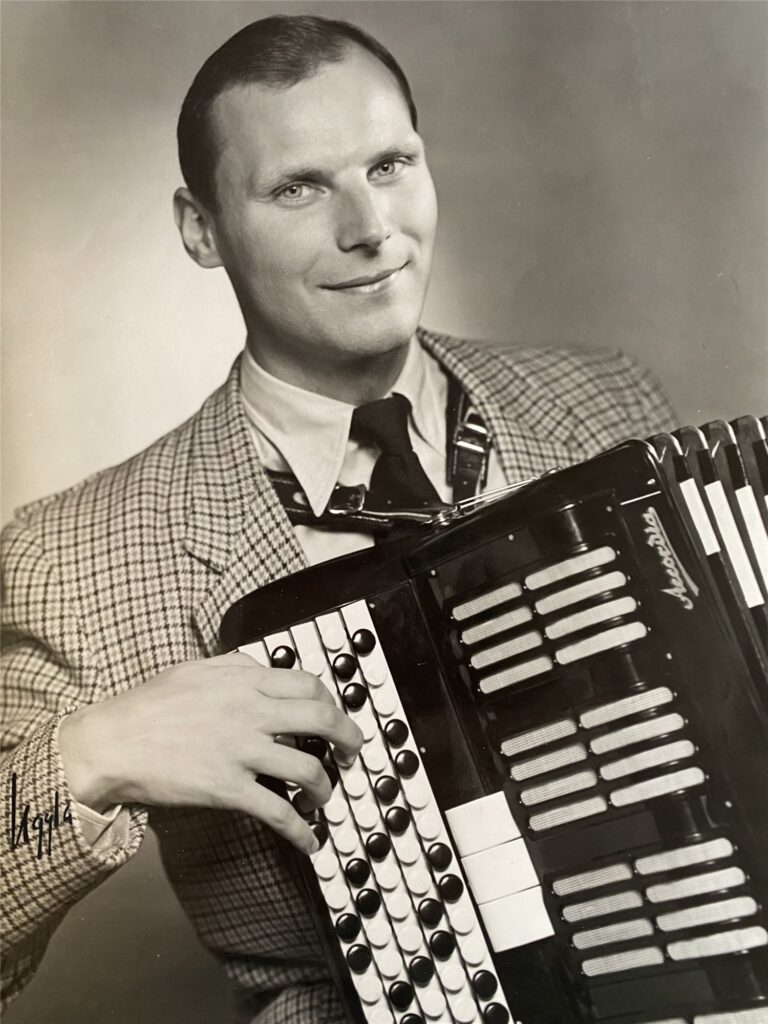
Studio portraits of Erling Grönstedt, including from the Pan and Robert studios. Family collection.
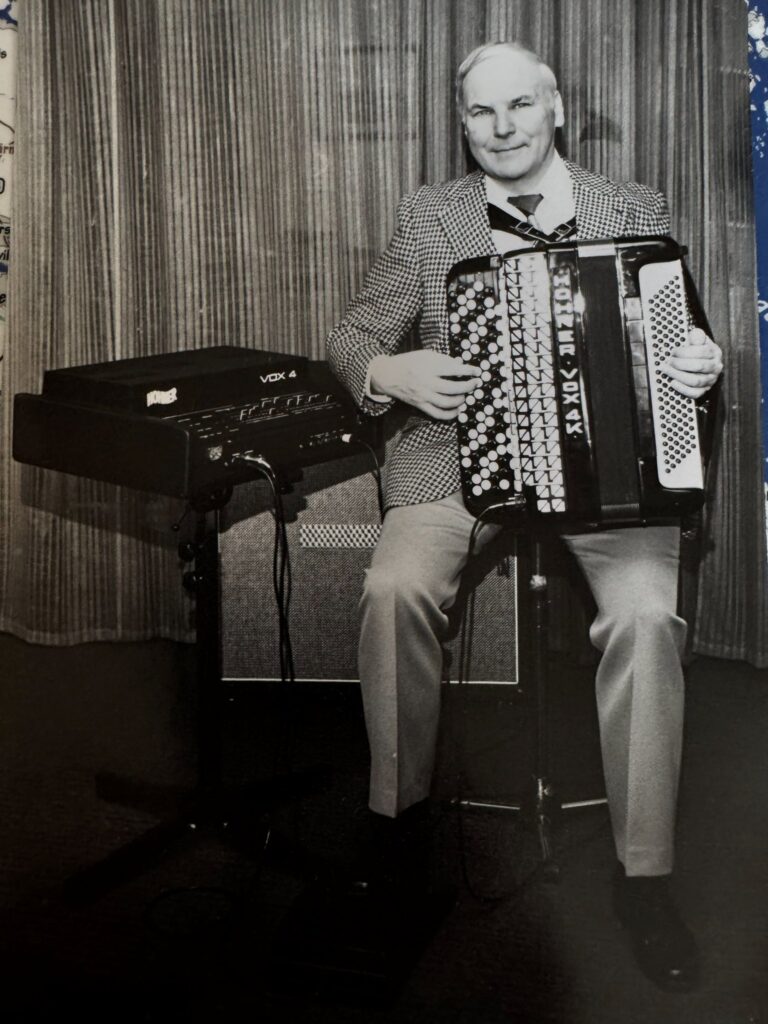
With accordion and amplifier in the 1970s.
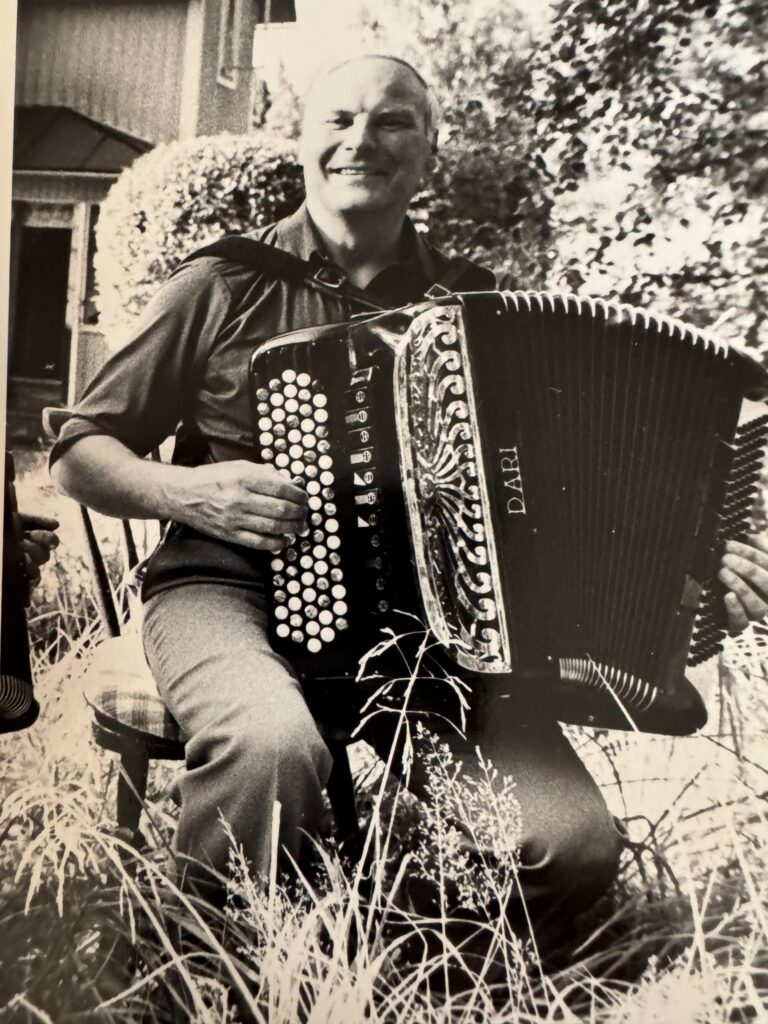
With his Dari – which today stands next to Kalle’s Giulietti in the Accordion Archive.
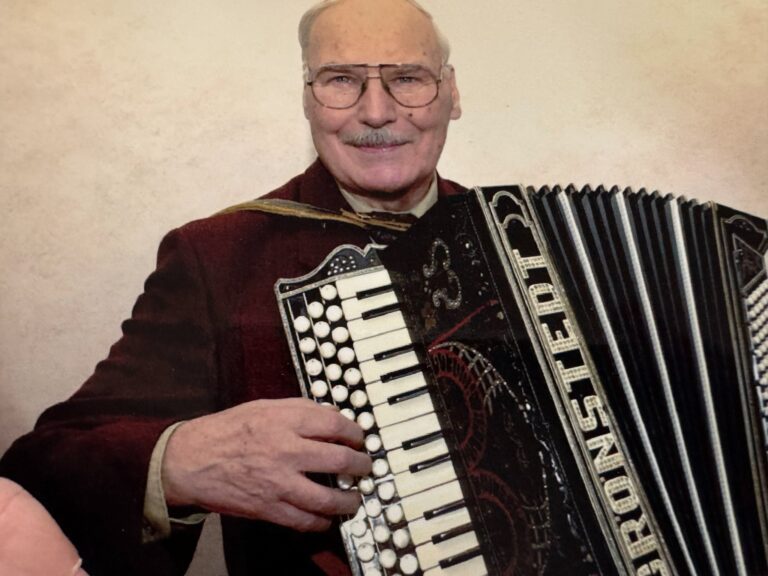
With the accordion marked GRÖNSTEDT, in his later years.
The painter
The brush and the accordion
Alongside his music Erling painted in oil, acrylic and watercolour, and he had a studio of his own. In the autumn of 1975 he exhibited at Galerie Swedenborgsgatan 13 in Stockholm. The opening was on Saturday 15 November, and the exhibition ran until 3 December.
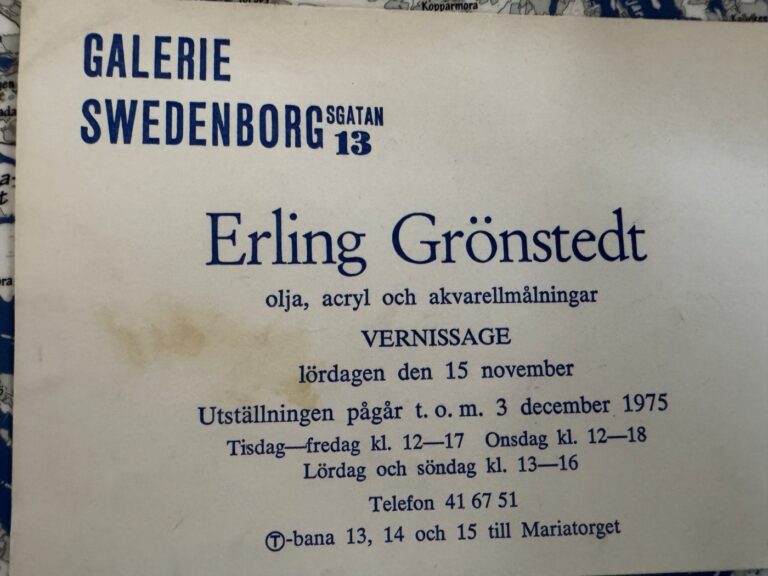
Invitation to the exhibition at Galerie Swedenborgsgatan 13, November–December 1975.
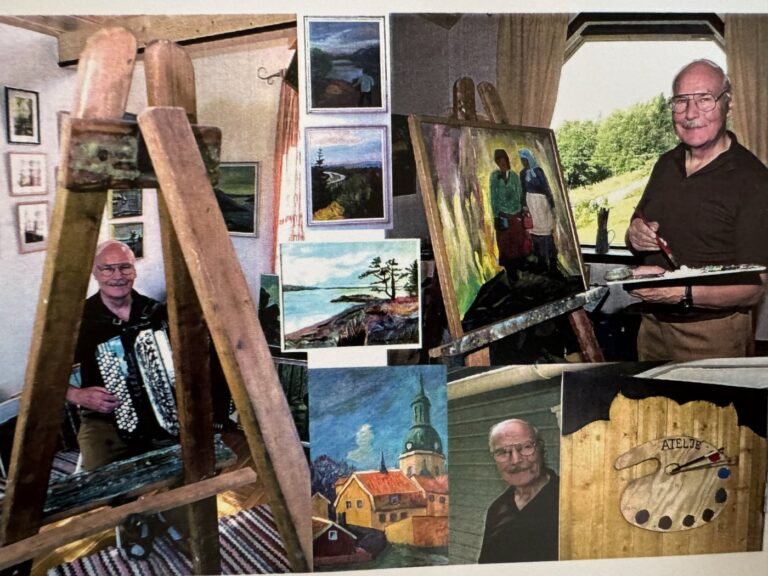
Erling at the easel, with his accordion and outside the studio. A collage made by the family.
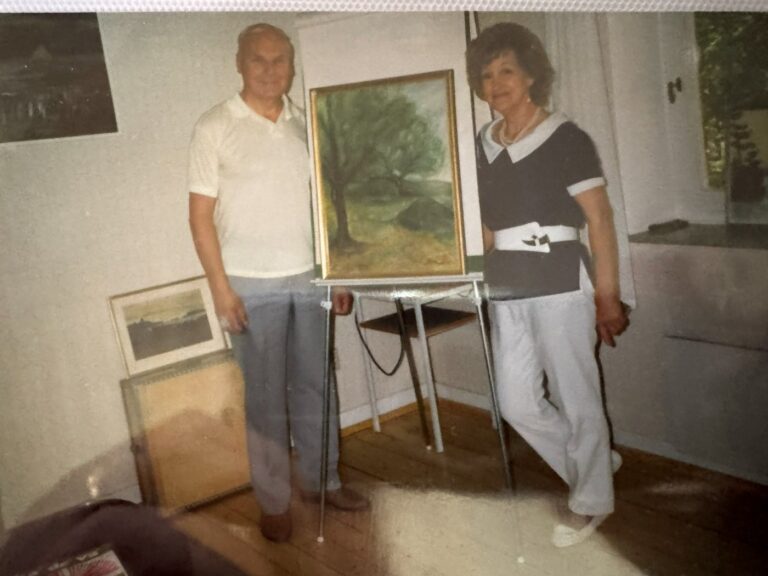
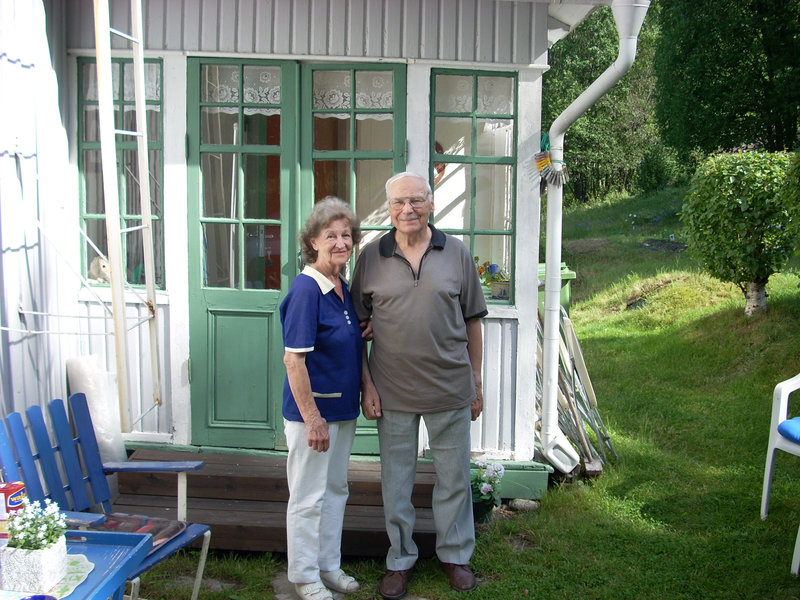
Erling and Birgit among the paintings.
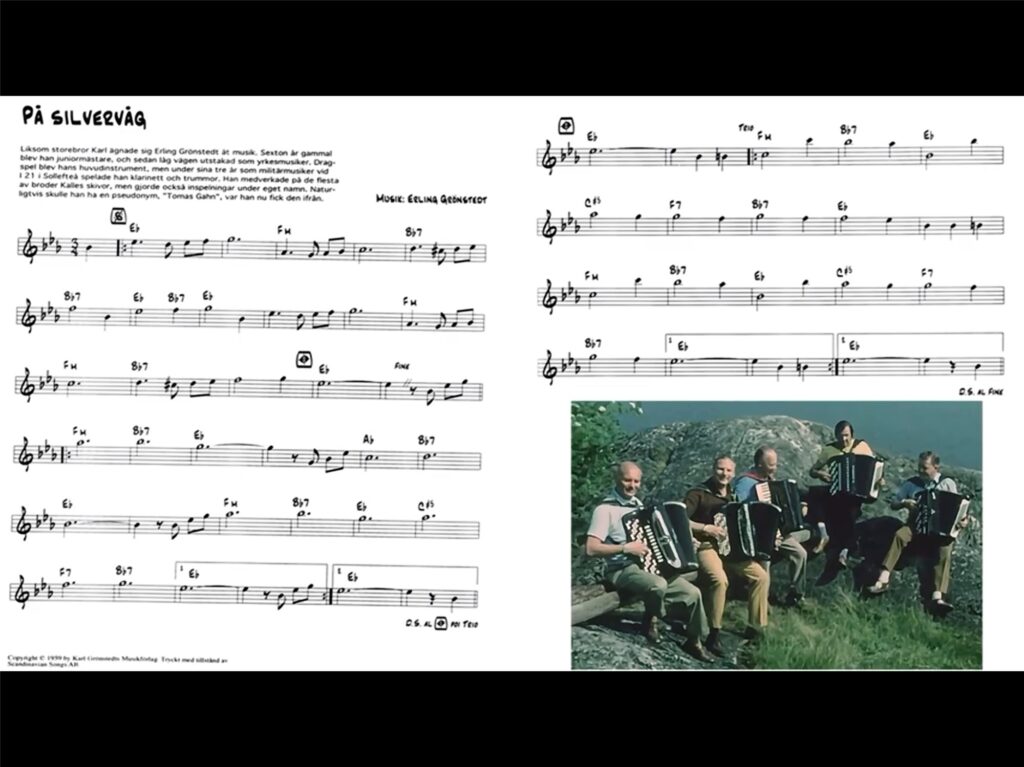
På Silvervåg – a film from 2002
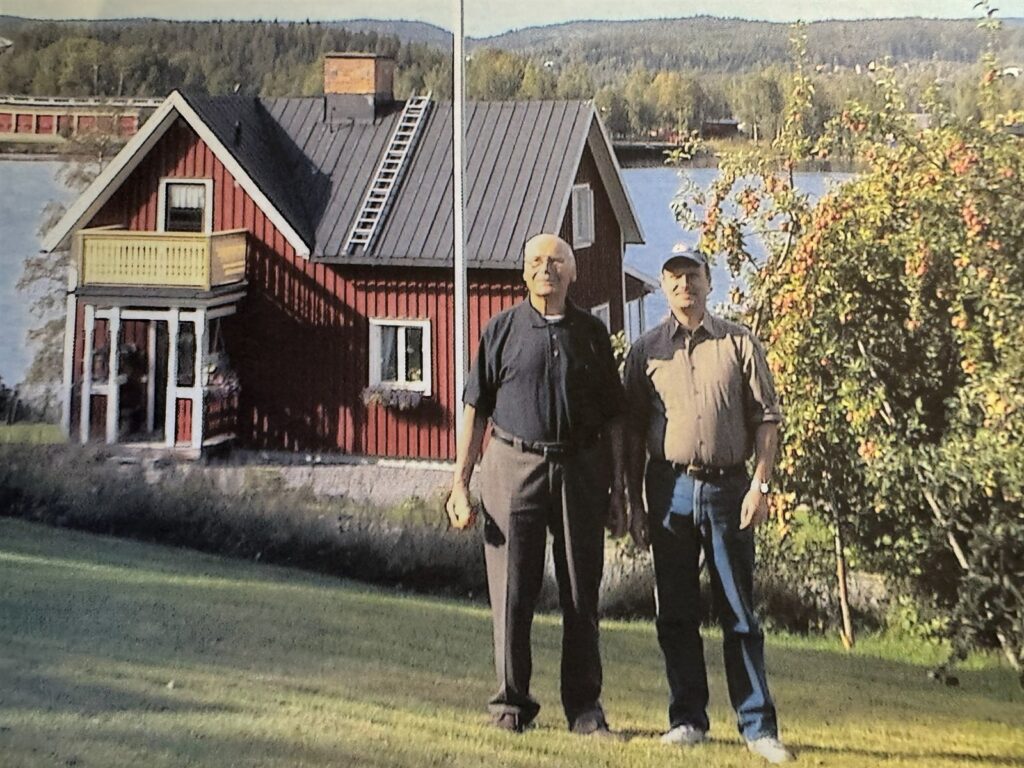
In 2002 Erling junior filmed his parents in Ådalen and then added music. The film opens at the High Coast Bridge, where Erling looks out over the Ångerman River. In the second part Birgit picks apples in the garden, and in the last Erling shows his studio, full of paintings.
0:00 På Silvervåg · 2:48 Måvikens Ros · 5:20 Konstnären
Filmed and edited by Erling Grönstedt junior, 2002. 7 min 23 s, with the music “På Silvervåg”, “Måvikens Ros” and “Konstnären”.
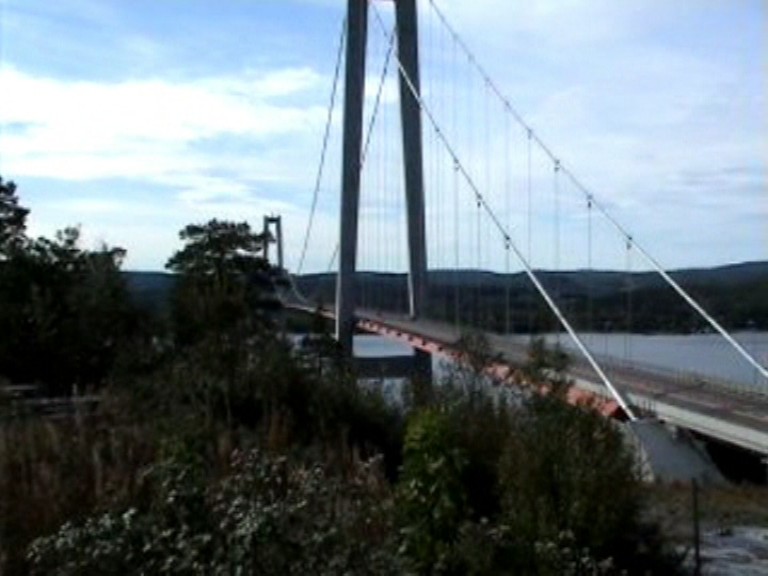
The High Coast Bridge.

Sunset over the river.
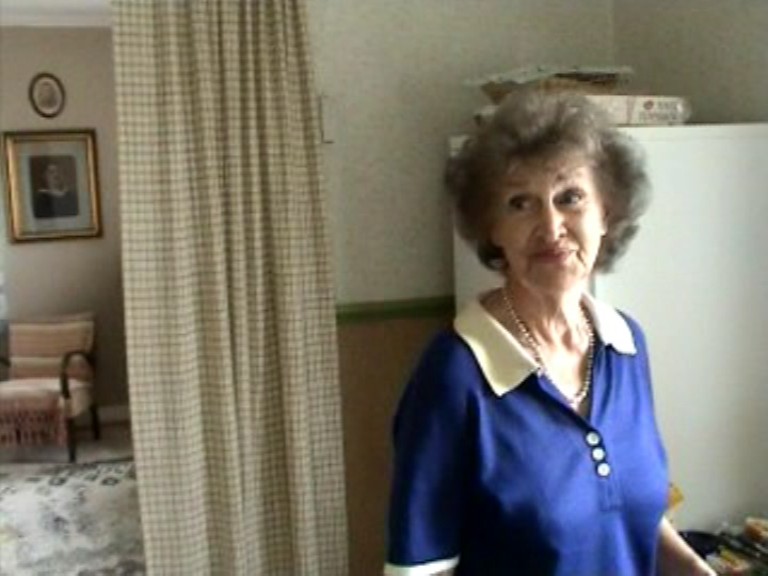
Birgit in the kitchen.
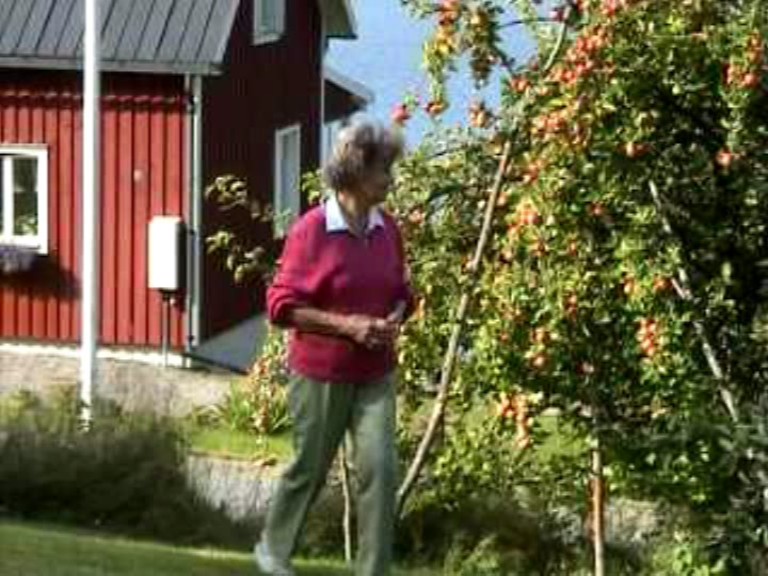
Birgit by the apple tree.
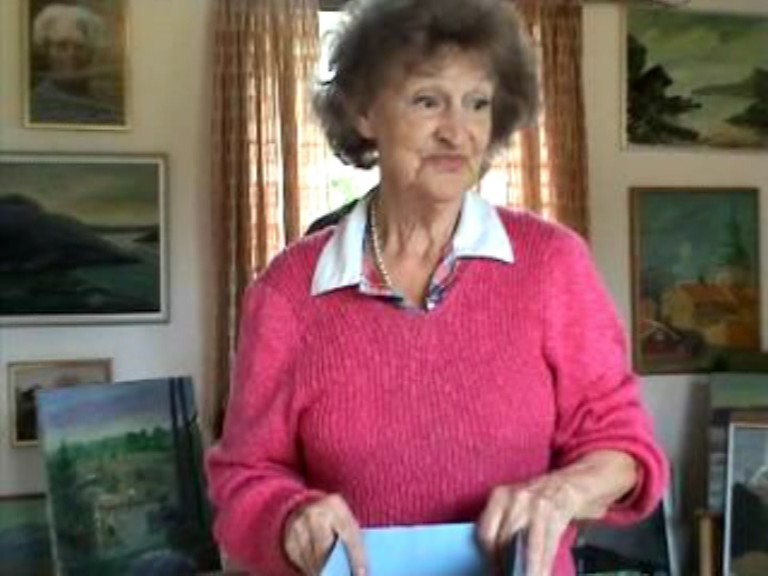
Birgit in the studio.
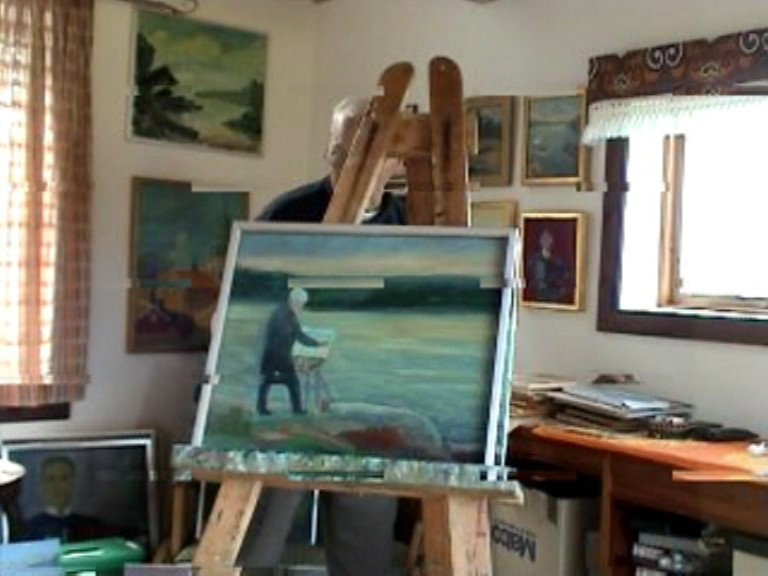
Erling’s painting of himself at the easel.
Legacy
Erling’s legacy and significance
100+ melodies
Music that lives on
“Norrlandstakter” and “Det gamla speluret” are still found in accordionists’ sheet music folders all over Sweden.
18 years of teaching
The teacher
As a teacher in Stockholm he inspired generations of accordionists and carried the musical heritage of Ådalen forward.
A sense of home
Ådalen before the world
He turned down an international career to stay in Ådalen – a choice that defined his life.
In his own words
“The perch shoal off Granholmen was too hard to leave.” – Erling on why he turned down Caterina Valente’s offer of a career in France.
The brothers
Karl and Erling – two sides of the same coin
Born 1912 · the eldest
Karl Grönstedt
- Personality: outgoing, businesslike
- Career: Stockholm, tours, film
- Best known for: Månsken över Ångermanälven
- Internationally: Nordic champion
- Home: Stockholm and Värmdö
Born 1923 · the youngest
Erling Grönstedt
- Personality: reserved, a homebody
- Career: Stockholm, tours, music teacher
- Best known for: Kaffetåren
- Internationally: turned down France
- Home: Stockholm, Härnösand and Spelmansvägen
Despite their different personalities and career paths, the brothers shared a deep love of Ådalen, accordion music and the Swedish folk music tradition. Together they carried the musical heritage of Ådalen to the whole of Sweden.
Listen
Hear Erling play
The CD “Dragspel ska’ de’ va’” (2001) is available on Spotify, Apple Music and Deezer.
Sources
Sources and references
- Wikipedia – Erling Grönstedt (Swedish)
- Sveriges Dragspelares Riksförbund (SDR)
- son-of-the-highcoast.com
- Olof Wigren – accordion historian
- Svensk mediedatabas (Swedish Media Database)
- Discogs, Apple Music, Deezer
- Grönstedt family archive
Keep exploring